
Free Worldwide Shipping on Orders Over $150
How to Use a Tagine: The Complete Guide

If you’ve just acquired your first authentic Moroccan tagine or you’re wondering how to unlock the full potential of this ancient cooking vessel, you’re about to discover a cooking method that has transformed ordinary ingredients into extraordinary meals for centuries. Learning how to use a tagine properly will open up a world of deeply flavorful, aromatic dishes that simply can’t be replicated with ordinary cookware.
The beauty of tagine cooking lies in its elegant simplicity. This two-part vessel—featuring a wide, shallow base and distinctive conical lid—creates a self-basting environment that tenderizes meat, infuses vegetables with concentrated flavors, and requires minimal liquid. Whether you’re cooking on a gas stove, electric burner, or in your oven, mastering the tagine will elevate your home cooking to new heights.
In this comprehensive guide, you’ll learn everything you need to know about using a tagine pot: from the essential first-time seasoning process to specific techniques for different heat sources, what dishes work best, and how to care for your handcrafted cookware so it lasts for generations.
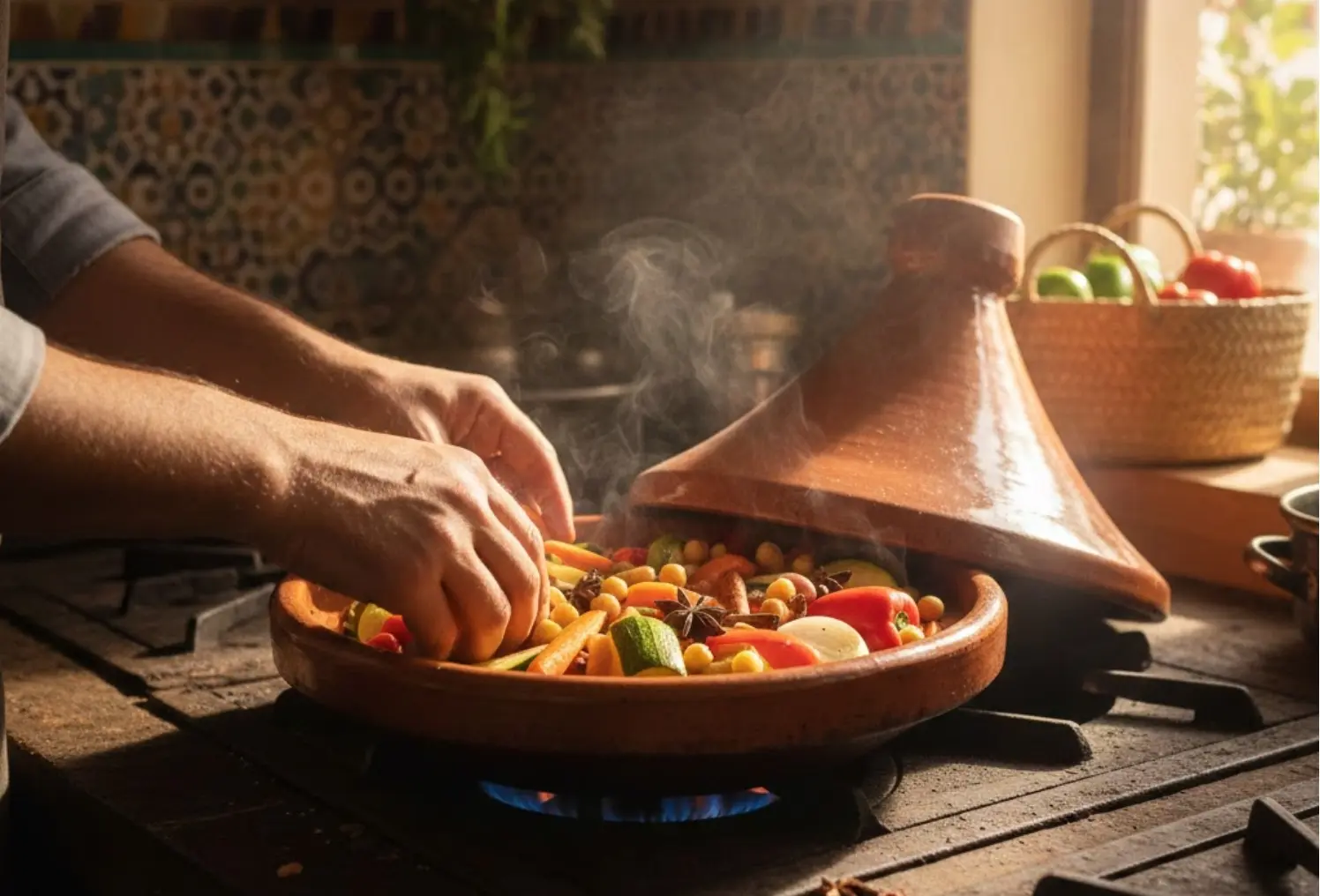
Understanding Your Tagine Cooking Vessel
Before you begin cooking in a tagine, it’s important to understand the ingenious design that makes this cookware so special. The tagine’s tall, conical lid isn’t just decorative—it’s the secret to its cooking magic.
As your ingredients simmer over low heat, steam rises into the cool conical lid. The steam then condenses into moisture and drips back down into the dish, creating a continuous cycle of self-basting. This process locks in flavors and aromas while keeping meat incredibly tender and vegetables perfectly soft, all with minimal added liquid.
This ancient design, developed by Berber communities in North Africa, was born from necessity. Nomadic peoples needed an efficient way to tenderize tough cuts of meat while conserving precious water and fuel. Today, this same principle makes the traditional Moroccan cooking tagine an invaluable tool in modern kitchens.
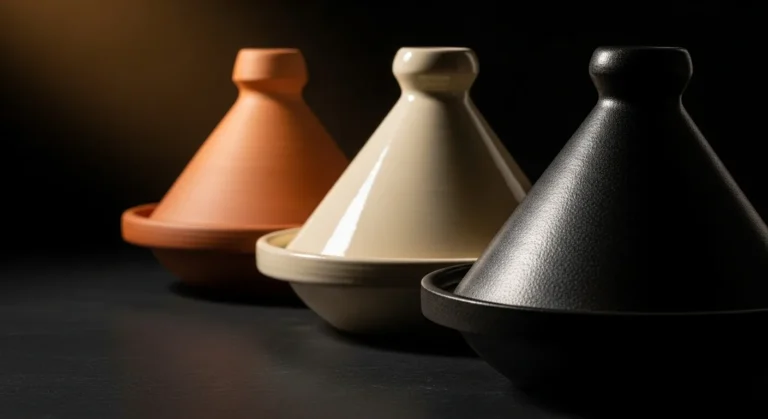
Note on Tagine Types: If you’ve purchased a decorative tagine with vibrant hand-painted designs, these are typically meant for serving and display, not cooking. For stovetop and oven use, you’ll need a functional cooking tagine made from heat-resistant clay or ceramic. You can explore the difference between cooking tagines and decorative tagines to ensure you have the right vessel for your needs.
How to Season a Tagine: Essential First-Time Preparation
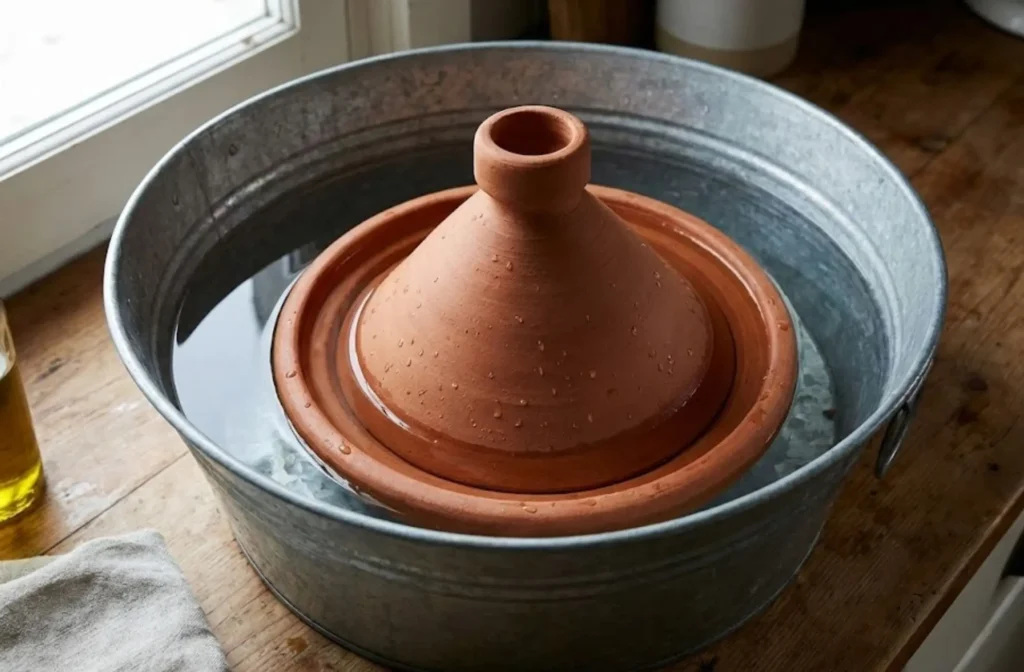
If you’re cooking with a tagine for the first time, seasoning is an absolutely critical step that cannot be skipped. This process strengthens the clay, prevents cracking, and ensures your tagine will perform beautifully for years to come.
The Complete Seasoning Process
Step 1: Soak Thoroughly
Submerge both the base and lid of your tagine in water for 8 to 24 hours. This allows the clay to absorb moisture fully, which is essential for preventing thermal shock and cracking during cooking.
Step 2: Dry Completely
After soaking, remove the tagine and allow it to air dry completely. This may take several hours. Don’t rush this step—any remaining moisture can cause issues during the next phase.
Step 3: Oil Generously
Once thoroughly dry, brush the interior and exterior of both pieces with olive oil. Pay special attention to the unglazed areas, as these are most porous and benefit most from conditioning.
Step 4: Slow Baking
Place your oiled tagine in a cold oven—never put it in a preheated oven, as sudden temperature changes can cause cracking. Gradually heat the oven to 225°F (110°C) and bake for 2 hours. This low, slow process allows the oil to penetrate the clay and creates a protective seal.
Step 5: Cool Naturally
After baking, turn off the oven and allow the tagine to cool completely inside. Again, gradual temperature changes are key to protecting your cookware.
After this seasoning process, your tagine is ready for its first cooking session. Some traditionalists recommend cooking an inexpensive vegetable tagine for your first use to further condition the pot, but this is optional.
How to Use a Tagine on a Gas Stove
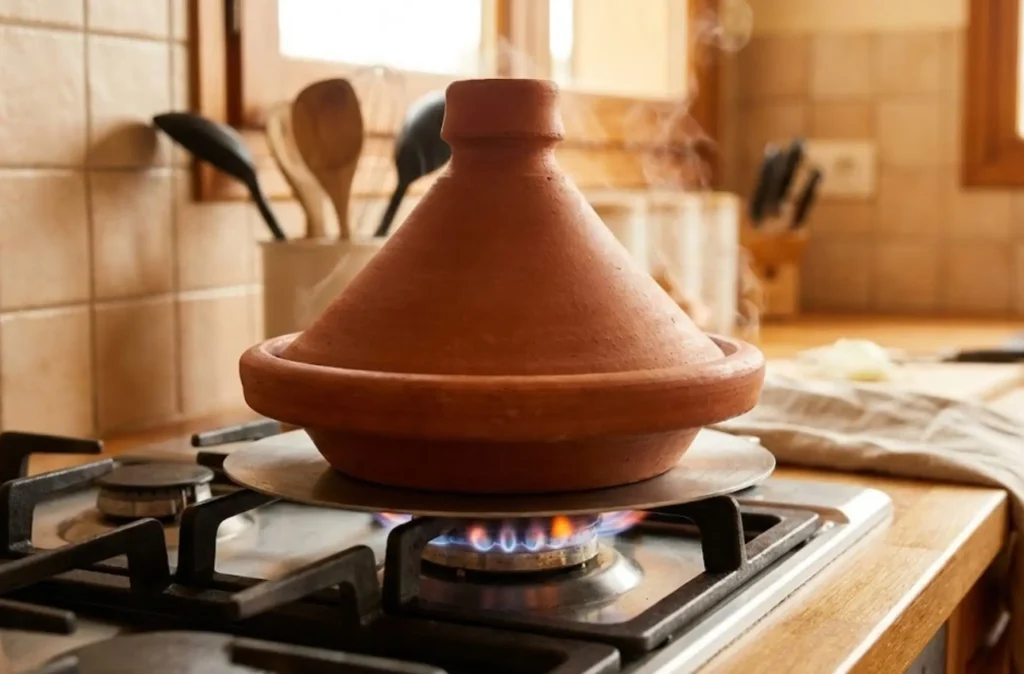
Using a tagine on a gas stove is one of the most popular and effective cooking methods, but it requires proper technique to prevent damage to your clay cookware.
Essential Equipment: The Heat Diffuser
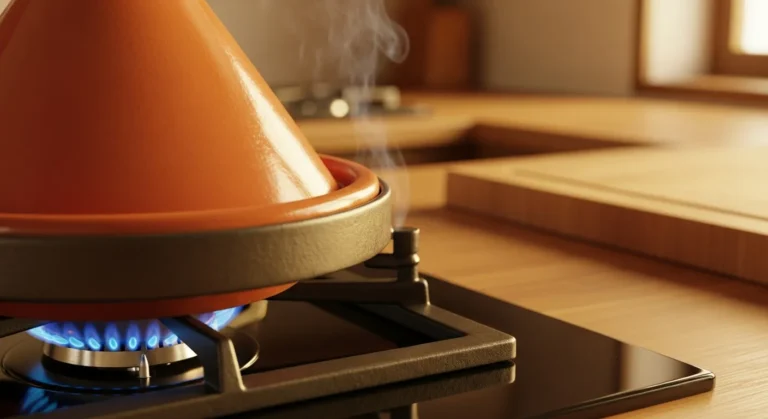
The most important tool for cooking with a tagine on a gas stove is a heat diffuser (also called a flame tamer). This flat, metal disk sits between the burner and your tagine, distributing heat evenly and preventing hot spots that could crack the clay.
Without a diffuser, the concentrated heat from a gas flame can create stress points in the clay. A heat diffuser typically costs $10-20 and is an essential investment for tagine cooking.
Gas Stove Cooking Technique
- Always Start Cold: Place your tagine on the heat diffuser while everything is still cold. Never put a cold tagine on a hot burner.
- Use Low to Medium-Low Heat: Gas stoves provide excellent heat control. Keep your flame on low to medium-low throughout cooking. The tagine design is optimized for gentle, slow cooking—not high heat.
- Allow for Gradual Heating: Turn the burner to low and let the tagine warm gradually over 10-15 minutes before increasing to your cooking temperature.
- Monitor Carefully: Check occasionally that your food has enough liquid. While the tagine’s design minimizes evaporation, some liquid is still necessary for the self-basting process to work.
- Expect 2-3 Hour Cooking Times: The beauty of tagine cooking is the slow development of flavors. Most recipes require 2-3 hours of gentle simmering.
How to Use a Tagine on an Electric Stove
Using a tagine on an electric stove requires extra attention, as electric burners cycle on and off to maintain temperature, creating potential temperature fluctuations.
Electric Stove Considerations
Heat Diffuser is Critical: Even more so than with gas, a heat diffuser is absolutely essential when using a tagine on an electric stove. The diffuser helps moderate the temperature cycling and prevents direct contact with the heating element.
Choose the Right Burner Size: Match your burner size to your tagine base. Using a burner that’s too small concentrates heat in one spot; using one that’s too large can create uneven heating.
Electric Stove Technique
- Start with a Cold Stove: Place your tagine on the diffuser on a cold burner.
- Use Lower Settings: Electric stoves often run hotter than their dial settings suggest. Start at the lowest setting and increase gradually only if necessary.
- Allow Extra Warm-Up Time: Give your tagine 15-20 minutes to warm up slowly before your ingredients begin actively simmering.
- Check Liquid Levels: Electric stoves can sometimes run hotter than expected. Monitor your dish and add small amounts of liquid if needed to prevent scorching.
- Avoid Temperature Shock: Never move your hot tagine directly from the burner to a cold surface. Use a trivet or wooden board.
The slight extra attention required for electric stoves is well worth it—you’ll still achieve the same tender, flavorful results that make tagine cooking so special.
How to Use a Tagine in the Oven
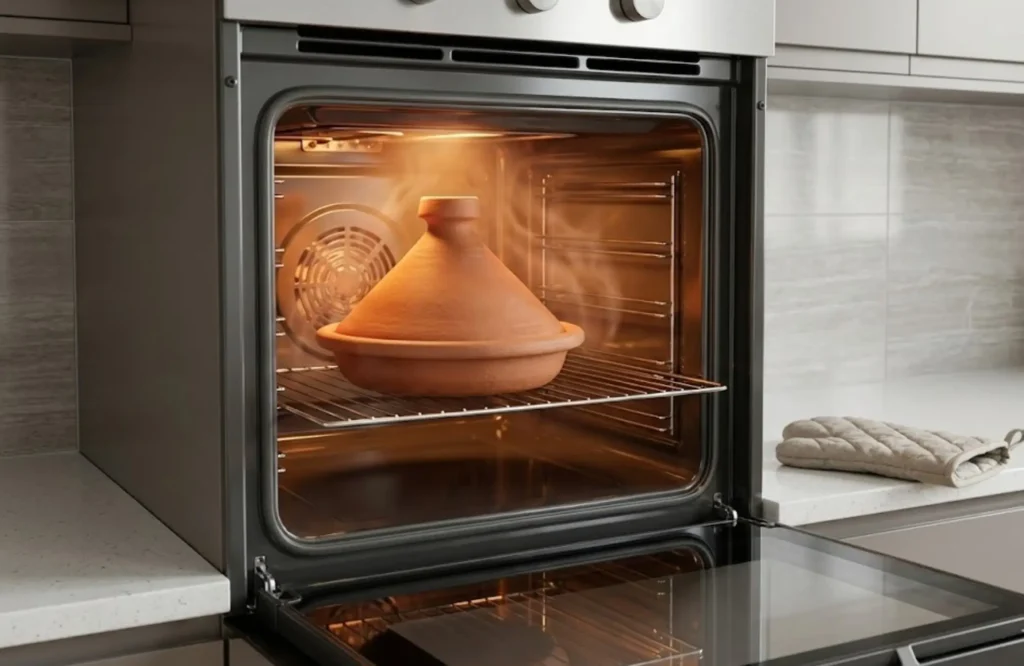
Many home cooks find that using a tagine in the oven is the easiest and most reliable method, offering consistent, even heat and requiring less monitoring than stovetop cooking.
Oven Cooking Advantages
- Consistent Temperature: Ovens maintain steady heat without the fluctuations of stovetop burners
- Even Heat Distribution: Heat surrounds the tagine from all sides, not just the bottom
- Less Monitoring Required: Once your tagine is in the oven, you can largely leave it alone
- No Heat Diffuser Needed: The oven’s gentle, surrounding heat eliminates the need for a diffuser
Oven Technique for Tagine Cooking
- Prepare Ingredients First: Since you may want to brown meat or sauté aromatics before oven cooking, do this in a separate pan on the stovetop, then transfer to your tagine.
- Place in Cold Oven: Always start with a cold oven to avoid thermal shock. Place your filled tagine on the middle rack.
- Set to 325-350°F (160-175°C): This moderate temperature range is ideal for tagine cooking. It’s hot enough to cook food thoroughly but gentle enough to allow flavors to meld.
- Allow 2-3 Hours Cooking Time: Similar to stovetop methods, oven tagine cooking is a slow process. Most recipes will need 2-3 hours.
- Check Occasionally: Peek in after the first hour to ensure you have adequate liquid. The oven method usually retains moisture well, but it’s worth verifying.
- Cool Before Removing: After turning off the oven, let your tagine cool for 10-15 minutes before removing it to a trivet.
Many experienced tagine cooks prefer the oven method for its reliability and hands-off convenience, especially when preparing traditional tagine recipes for dinner parties.
Mastering Tagine Cooking Techniques
Beyond understanding your heat source, successful tagine cooking involves several key techniques that ensure optimal results.
Layering Your Ingredients
Traditional Moroccan cooks layer ingredients strategically for best results:
- Start with Aromatics: Place onions and garlic at the bottom of the base
- Add Protein: Arrange meat or fish in the center
- Surround with Vegetables: Place vegetables around and on top of the protein
- Drizzle with Oil and Spices: Add olive oil and your spice blend over everything
- Add Minimal Liquid: Pour in just enough broth or water to create steam (usually 1-2 cups)
This layering ensures that aromatics infuse the entire dish, meat cooks evenly, and vegetables become tender without turning mushy.
Understanding the Lid’s Role
The conical lid is the heart of how a tagine works. Once you place the lid on the base, avoid lifting it frequently. Each time you remove the lid, you release the steam that’s creating that self-basting magic. Check your tagine only once or twice during cooking—trust the process.
Adjusting Liquid Levels
While the tagine’s design minimizes evaporation, you still need adequate liquid for the steam cycle to function. If you peek inside and notice liquid levels are very low (less than 1/4 inch in the base), add a small amount of warm water or broth. Never add cold liquid to a hot tagine.
Finishing Your Dish
In the final 30 minutes of cooking, you can add delicate ingredients that don’t need hours of cooking—such as preserved lemons, olives, or fresh herbs. These finishing touches add bright flavors without becoming overcooked.
What to Cook in a Tagine: Best Recipes and Ingredients
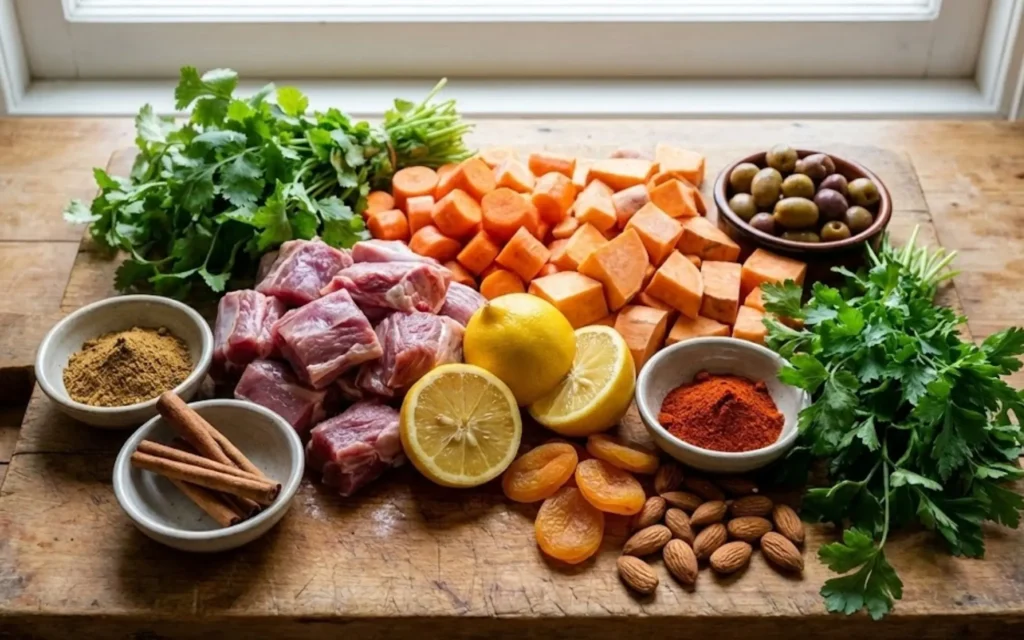
One of the most common questions new tagine owners ask is: what do you cook in a tagine? The answer is wonderfully versatile.
Classic Tagine Proteins
Lamb: The traditional choice. Lamb shoulder or leg, cut into chunks, becomes fall-off-the-bone tender. Try it with prunes and apricots for a sweet-savory classic.
Chicken: Chicken thighs work best for tagine cooking, as they stay moist through long cooking. The combination of chicken with preserved lemons and olives is a Moroccan staple.
Beef: Chuck roast or short ribs are excellent choices. Their marbling keeps them tender during slow cooking.
Fish: White fish like cod or sea bass cook beautifully when marinated in chermoula (a Moroccan herb and spice blend). Fish tagines typically need only 30-45 minutes of cooking.
Vegetarian Options: Hearty vegetables like chickpeas, sweet potatoes, carrots, zucchini, and eggplant create satisfying meatless tagines.
Essential Flavor Elements
Authentic tagine cooking relies on a few key ingredients:
- Moroccan Spice Blend: Cumin, coriander, turmeric, ginger, cinnamon, and paprika
- Aromatics: Onions and garlic form the flavor foundation
- Preserved Lemons: These provide a distinctive salty-tangy brightness
- Olives: Green or purple olives add depth and saltiness
- Dried Fruits: Prunes, apricots, or dates contribute subtle sweetness
- Fresh Herbs: Cilantro and parsley add freshness
- Nuts: Toasted almonds make an excellent garnish
Serving Your Tagine
Traditionally, tagines are served family-style, with the conical lid removed at the table for dramatic presentation. Serve with fluffy couscous, crusty bread, or over a bed of rice. The bread is especially useful for soaking up the flavorful broth.
For more specific recipe inspiration, explore our collection of authentic tagine recipes that guide you through preparation from start to finish.
Caring for Your Tagine Cookware
Proper care ensures your handcrafted tagine will serve you for years, even decades.
Cleaning Your Tagine
- Hand Wash Only: Never put a tagine in the dishwasher. Wash gently with warm water and mild dish soap.
- Avoid Abrasives: Use a soft sponge or cloth—no steel wool or abrasive scrubbers
- Dry Completely: After washing, dry your tagine thoroughly with a towel and allow it to air dry before storing
- Occasional Oil Rub: Every few uses, rub the interior with a light coating of olive oil to maintain the seasoning
Storage Tips
- Store Uncovered: Allow air circulation to prevent moisture buildup and musty odors
- Safe Location: Store your tagine where it won’t get knocked or bumped—the lid is particularly fragile
- Lid Position: If stacking, place a soft cloth between the lid and base to prevent chipping
What to Avoid
- Thermal Shock: Never put a hot tagine on a cold surface or add cold liquid to a hot tagine
- High Heat: Tagines are designed for low, slow cooking—not high temperatures
- Dishwasher: The harsh detergents and heat cycles will damage your tagine
- Freezer: Never put your tagine in the freezer
With proper care, your authentic Moroccan tagine becomes more seasoned and performs better with age, developing character and history with every meal you prepare.
Troubleshooting Common Tagine Cooking Issues
Food is Burning or Sticking: Your heat is too high, or you don’t have enough liquid. Reduce heat and add a small amount of warm liquid.
Food is Too Watery: You may have added too much liquid initially. Remember, the tagine’s design retains moisture exceptionally well—you need less liquid than you’d use in a regular pot.
Tagine Cracked: This usually results from thermal shock—rapid temperature changes. Always start with a cold tagine on a cold heat source and warm gradually.
Flavors are Bland: Tagine cooking requires generous seasoning. Don’t be shy with spices, aromatics, and salt. Also ensure you’re cooking long enough for flavors to develop fully.
Meat is Tough: Continue cooking. The tagine excels at tenderizing tough cuts, but it takes time. Most recipes need a full 2-3 hours.
Start Your Tagine Cooking Journey Today
Learning how to use a tagine opens up a world of aromatic, deeply satisfying meals that connect you to centuries of Moroccan culinary tradition. Whether you’re cooking on a gas stove, electric burner, or in your oven, the key principles remain the same: season your tagine properly, use low and slow heat, layer your ingredients thoughtfully, and trust the self-basting process to work its magic.
The first time you remove that conical lid to reveal fall-apart-tender meat bathed in a rich, spice-infused sauce, surrounded by perfectly cooked vegetables, you’ll understand why this ancient cooking method has stood the test of time.
Ready to experience authentic Moroccan cooking in your own kitchen? Explore our collection of handcrafted cooking tagines, each made by skilled artisans using traditional techniques passed down through generations. Every tagine we offer is a unique piece of functional art that will transform your home cooking.
For more guidance on Moroccan cuisine and cooking techniques, visit our learning center where we share the traditions and techniques that make tagine cooking so special.

[…] Require seasoning before first use (learn the complete process here) […]