Free Worldwide Shipping on Orders Over $150
Moroccan Tagine Care: The Complete Guide to Cleaning, Storing, and Maintaining Your Tagine

There’s something deeply satisfying about lifting the conical lid of a tagine after hours of slow cooking—the aromatic steam, the tender meat, the rich spiced broth. But what happens after the meal is finished? Moroccan tagine care is essential for preserving both the beauty and functionality of your handcrafted cookware. Whether you own an unglazed clay tagine, a glazed ceramic piece, or a decorative Safi pottery treasure, this comprehensive guide will show you exactly how to take care of a tagine so it lasts for generations.
Proper tagine care isn’t complicated, but it does require understanding your specific type of tagine and following a few essential practices. The artisans in Morocco who craft these vessels by hand follow traditions that have been refined over centuries—and the maintenance practices they recommend are just as time-tested.
Understanding Your Tagine: Glazed vs. Unglazed
Before diving into cleaning and care techniques, it’s important to understand what makes a tagine unique and identify which type you own. For an in-depth comparison, see our guide on glazed vs unglazed tagines. This distinction directly affects how you should care for your tagine.
Unglazed Clay Tagines
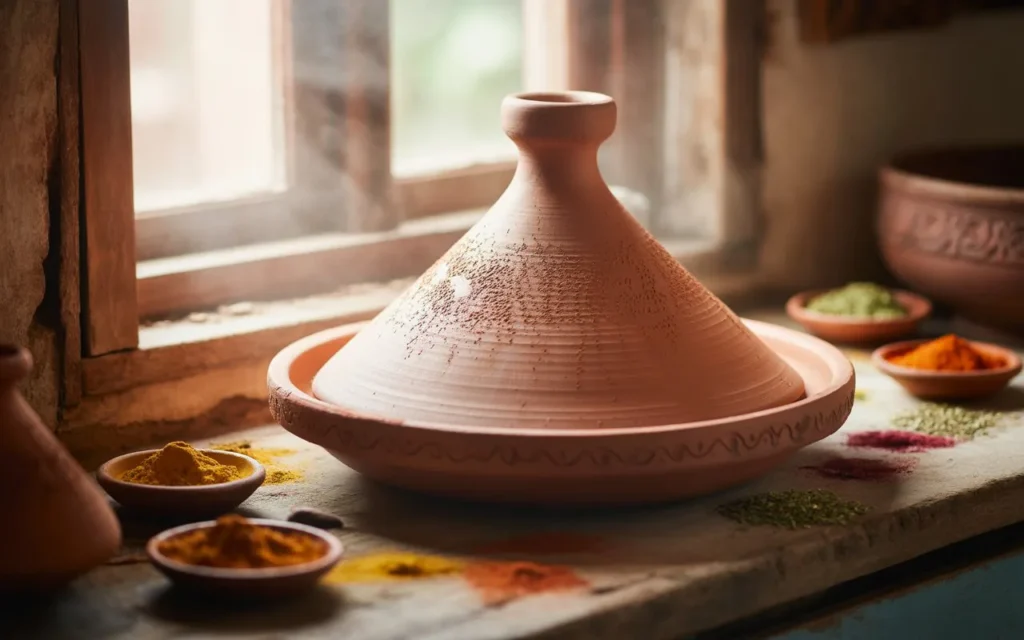
Unglazed tagines, like the Eco Moroccan Clay Tagine, are made from natural, porous clay. This material absorbs flavors over time, developing what cooks call a “seasoned patina” that enhances the taste of your dishes. However, this porosity requires special attention during cleaning and storage.
Glazed and Ceramic Tagines
Glazed tagines feature a protective coating that makes them non-porous and easier to clean. Decorative pieces like the Moroccan Handcrafted White Glazed Tagine are typically hand-painted by master artisans in cities like Safi and Fez, making them both functional and visually stunning.
How to Clean a Tagine After Cooking
The golden rule of tagine cleaning: always wait for your tagine to cool completely before washing. Exposing a hot tagine to cold water can cause thermal shock, leading to cracks that will ruin your cookware. Once cooled, follow these steps:
Cleaning an Unglazed Tagine
- Rinse with warm water – Use only warm water to loosen food particles
- Use a soft brush or cloth – Gently scrub the surface to remove stuck-on food
- Avoid harsh abrasives – Never use steel wool or scouring pads that could damage the clay
- Skip the soap – For unglazed tagines, warm water is usually sufficient
Can You Wash a Tagine with Soap?
This is one of the most common questions about Moroccan tagine care. For unglazed clay tagines, avoid using dish soap whenever possible. The porous clay can absorb soap residue, which may affect the flavor of your next meal. If you must use soap (for particularly stubborn grease), use a tiny amount of mild, unscented dish soap and rinse extremely thoroughly.
For glazed tagines, a small amount of mild dish soap is acceptable because the glaze prevents absorption. However, always rinse thoroughly to ensure no soap residue remains.
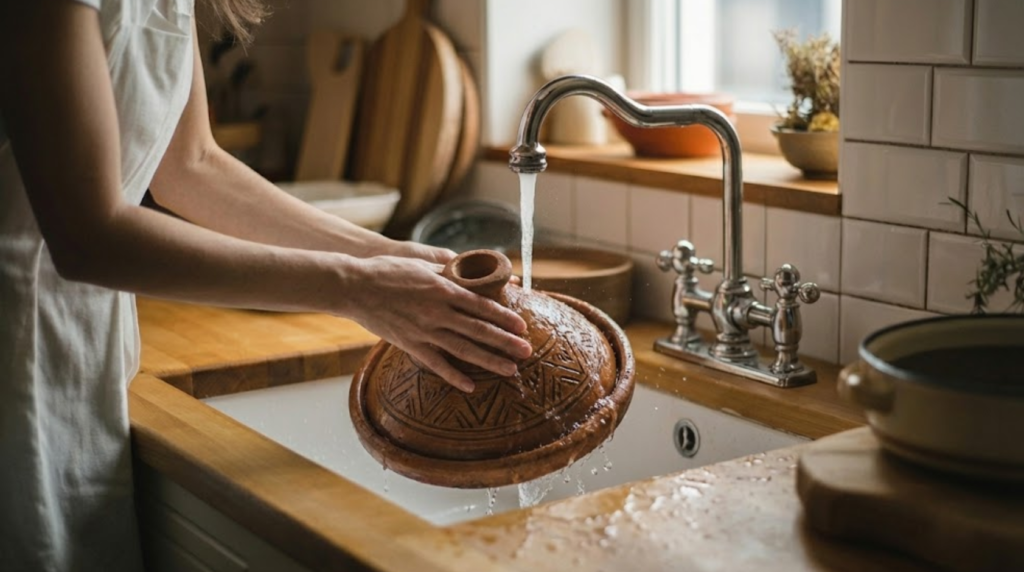
Cleaning a Glazed Tagine
- Allow to cool completely – This remains essential even for glazed pieces
- Wash with warm soapy water – A mild dish soap is safe for glazed surfaces
- Use a soft sponge – Avoid anything abrasive that could scratch the decorative finish
- Rinse thoroughly – Remove all soap residue
- Dry completely – Never store a damp tagine
How to Remove Smells from a Tagine
Over time, your tagine may develop lingering odors from strongly spiced dishes. Here are natural methods to freshen your cookware:
The Baking Soda Method
- Create a paste using baking soda and warm water
- Apply the paste to the interior of your tagine
- Let it sit for 30 minutes to an hour
- Rinse thoroughly with warm water
- Air dry completely
The Vinegar Soak
For stubborn odors:
- Fill your tagine with equal parts water and white vinegar
- Let it soak for one to two hours
- Rinse thoroughly
- Dry completely before storing
Natural Sunlight
After cleaning, place your tagine in direct sunlight for a few hours. The UV rays help neutralize odors naturally—a technique Moroccan artisans have used for generations.
How to Store a Tagine Properly
Proper storage protects your tagine from damage and ensures it’s ready for your next culinary adventure. Whether you cook with your tagine weekly or save it for special occasions, these storage practices are essential.
Storage Tips for All Tagines
- Ensure complete dryness – Any moisture left in clay can lead to mold growth or musty odors
- Store the lid separately – If stacked, place a cloth or paper towel between the base and lid to prevent chipping
- Choose a dry location – Avoid damp areas like under-sink cabinets
- Allow air circulation – Don’t store in airtight containers or plastic bags
Long-Term Storage
If storing your tagine for extended periods:
- Clean and dry thoroughly
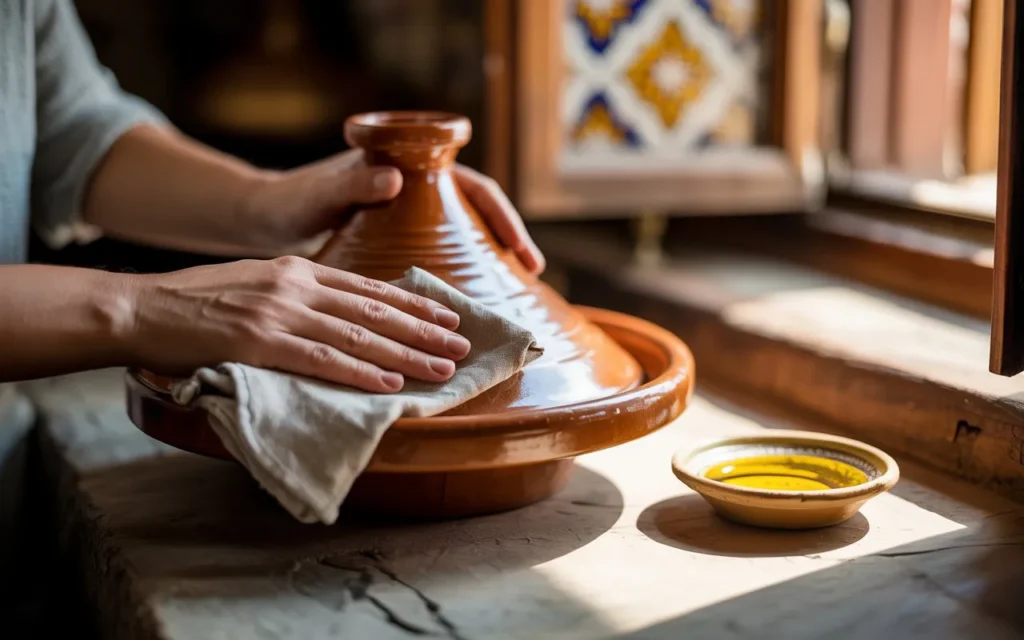
- Apply a light coating of olive oil to unglazed clay to prevent cracking
- Wrap loosely in cloth – Never use plastic wrap directly on clay
- Store in a temperature-stable location – Avoid areas with extreme temperature fluctuations
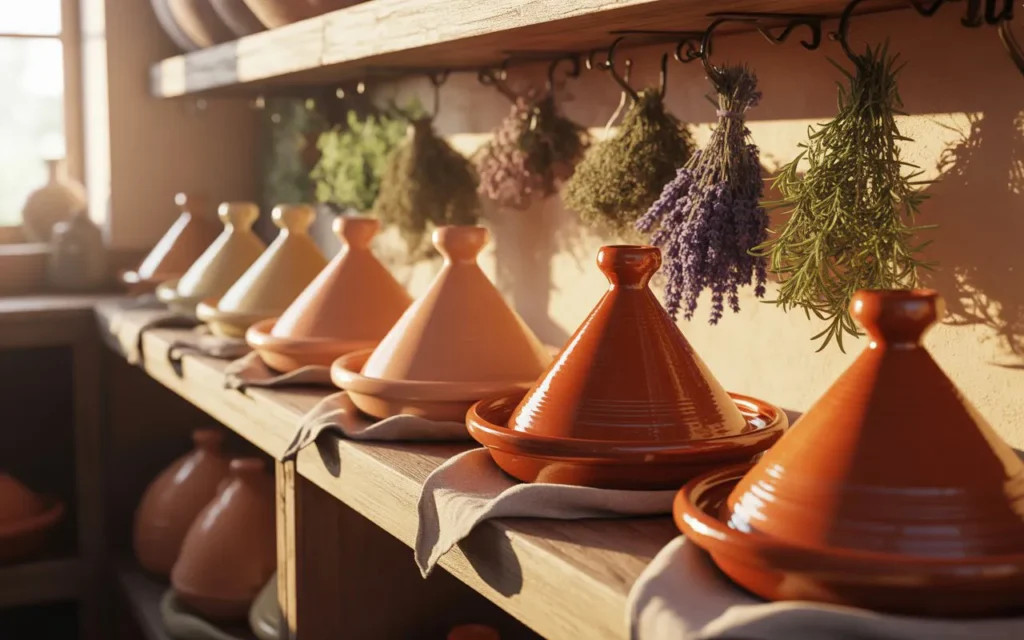
How to Maintain a Clay Tagine for Years of Use
Beyond cleaning and storage, ongoing maintenance keeps your tagine performing at its best. Here’s how to maintain a clay tagine for optimal cooking results.
Regular Seasoning
Your tagine needs occasional re-seasoning, especially after heavy use or deep cleaning. Our guide on how to season a tagine covers the complete seasoning process, but here’s a quick refresher for maintenance:
- Soak your clean tagine in water for 2 to 4 hours
- Dry completely
- Rub with olive oil – Apply a thin, even coat to the interior and exterior
- Heat slowly in the oven at 225°F (110°C) for 2 hours
- Cool naturally in the oven with the door closed
Inspect Before Each Use
Before cooking, check your tagine for:
- Visible cracks or chips
- Loose pieces of clay
- Unusual discoloration (which could indicate mold)
Small hairline cracks may develop over time—this is normal for handcrafted clay cookware and usually doesn’t affect performance. However, deep cracks that penetrate the full thickness of the clay mean it’s time for a replacement.
Embrace the Patina
As you use your cooking tagine, it will develop a natural patina—a seasoning layer that builds up from oils, spices, and repeated use. This patina is desirable! It:
- Improves non-stick properties
- Adds depth of flavor to your dishes
- Creates a unique character for your cookware
Don’t try to scrub away this seasoning. Instead, celebrate it as the mark of well-used, well-loved cookware.
Terracotta Tagine Care: Special Considerations
Terracotta tagines require some additional attention due to the nature of the material:
Preventing Thermal Shock
Never do these things:
- Place a cold tagine on a hot burner
- Add cold liquid to a hot tagine
- Plunge a hot tagine into cold water
- Move from freezer to oven
Instead, always allow gradual temperature changes—start with low heat and increase slowly.
Using a Heat Diffuser
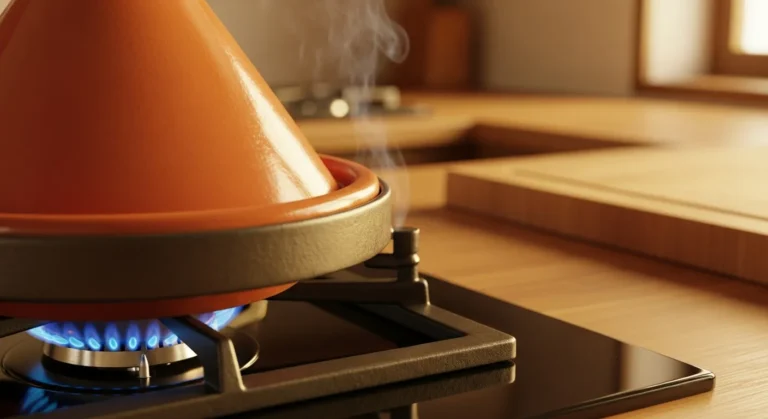
For stovetop cooking, especially on gas or electric burners, use a heat diffuser between your tagine and the heat source. This distributes heat evenly and protects the clay from direct flame contact.
Handling with Care
Terracotta is durable for cooking but fragile against impact. Always:
- Use both hands when carrying your tagine
- Set it down gently on heat-resistant surfaces
- Avoid metal utensils that could chip the interior
Caring for Decorative Tagines
Decorative tagines and mini tagines are works of art meant for serving and display, not for cooking. Their care is simpler:
- Dust regularly with a soft, dry cloth
- Hand wash gently if used for serving cold dishes
- Display away from direct sunlight to prevent color fading
- Handle with care – decorative pieces are often more delicate than cooking tagines
These beautiful pieces, like the Moroccan Safi Triple Mini Tagine, are hand-painted by master artisans and deserve gentle treatment to preserve their intricate designs.
Common Tagine Care Mistakes to Avoid
Learning how to take care of a tagine also means knowing what NOT to do:
| Mistake | Why It’s Harmful | What to Do Instead |
|---|---|---|
| Dishwasher cleaning | Can cause cracking and removes seasoning | Always hand wash |
| Using harsh chemicals | Damage clay and leave harmful residues | Stick to warm water, mild soap if needed |
| Storing while damp | Promotes mold and musty odors | Dry completely before storing |
| Sudden temperature changes | Causes thermal shock and cracking | Always allow gradual temperature changes |
| Neglecting re-seasoning | Clay dries out and becomes prone to cracking | Season regularly with olive oil |
Troubleshooting Common Tagine Issues
My Tagine Has a White Film
This chalky residue is usually mineral deposits from hard water. Soak your tagine in a solution of one part white vinegar to three parts water for 30 minutes, then scrub gently and rinse thoroughly.
My Tagine Smells Musty
This indicates the tagine was stored while still damp or in a humid environment. Clean with baking soda paste, dry thoroughly in sunlight, and re-season with olive oil before your next use.
My Tagine Has Small Cracks
Hairline cracks are common and usually not a problem. To minimize them, ensure you’re always warming your tagine gradually and keeping the clay well-seasoned with olive oil. For detailed information on causes, prevention, and solutions, read our complete guide on why tagines crack and how to prevent it.
Final Thoughts: A Tagine That Tells Your Story
Every well-maintained tagine becomes a cherished piece of kitchen history. The naturals marks, the deepening patina, the subtle color changes—these tell the story of countless meals shared with family and friends. When you properly care for your handcrafted Moroccan tagine, you’re not just maintaining cookware. You’re honoring the centuries-old traditions of Moroccan artisans and the time-tested cooking methods that have made tagine dishes legendary.
Ready to start your tagine journey? Explore our collection of authentic cooking tagines or discover the perfect tagine recipes to try with your newly cared-for cookware.