Free Worldwide Shipping on Orders Over $150
Glazed vs Unglazed Tagine: Which One Is Right for Your Kitchen?

Standing in front of a collection of Moroccan tagines, the choice can feel overwhelming. Should you choose the stunning hand-painted ceramic piece or the rustic, natural clay pot? Understanding the difference between glazed vs unglazed tagine is essential for making the right decision—one that matches your cooking style, aesthetic preferences, and culinary ambitions.
The truth is, both types have their place in Moroccan culinary tradition. For centuries, artisans in cities like Safi and Fez have perfected both styles, each serving a distinct purpose. This comprehensive guide will walk you through everything you need to know to choose the right tagine for your kitchen.
Standing in front of a collection of Moroccan tagines, the choice can feel overwhelming. Should you choose the stunning hand-painted ceramic piece or the rustic, natural clay pot? Understanding the difference between glazed vs unglazed tagine is essential for making the right decision—one that matches your cooking style, aesthetic preferences, and culinary ambitions.
The truth is, both types have their place in Moroccan culinary tradition. For centuries, artisans in cities like Safi and Fez have perfected both styles, each serving a distinct purpose. This comprehensive guide will walk you through everything you need to know to choose the right tagine for your kitchen.
Understanding the Traditional Moroccan Tagine
Before diving into the glazed versus unglazed debate, it’s helpful to understand what a tagine actually is and why this iconic cooking vessel has remained unchanged for centuries.
A tagine consists of two parts: a wide, shallow base for cooking and a tall, conical lid that traps steam. As food simmers, moisture rises into the cool cone, condenses, and drips back down—creating a continuous self-basting cycle that produces incredibly tender, flavorful dishes with minimal added liquid.
This ingenious design originated with the Berber communities of North Africa, who developed it as a portable “oven” for tenderizing tough cuts of meat using scarce fuel resources. Today, the tagine remains the heart of Moroccan cuisine, gracing tables from humble family kitchens to grand celebrations.
Image Prompt for Traditional Tagine Section: An authentic traditional Moroccan tagine sitting on glowing charcoal embers in an outdoor kitchen setting, steam rising from around the lid, warm earthy sunset lighting, rustic stone cooking area with traditional Moroccan textiles in background, deep terracotta and amber color palette. 16:10 aspect ratio. Photorealistic style. NO text or words visible anywhere in the image.
Glazed vs Unglazed Tagine: The Difference
The primary distinction comes down to the surface treatment and intended use. Let’s explore what makes each type unique.
What Is an Unglazed Tagine?
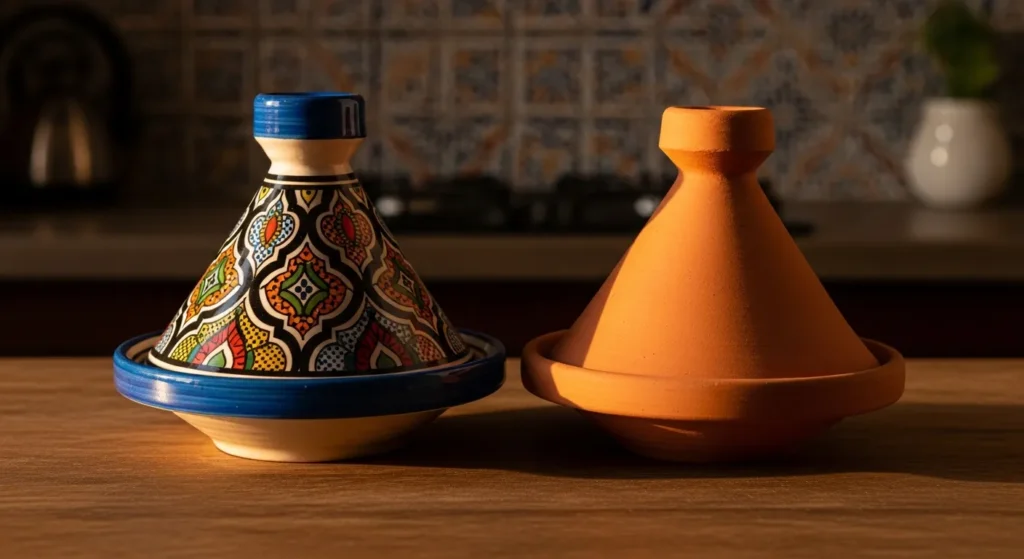
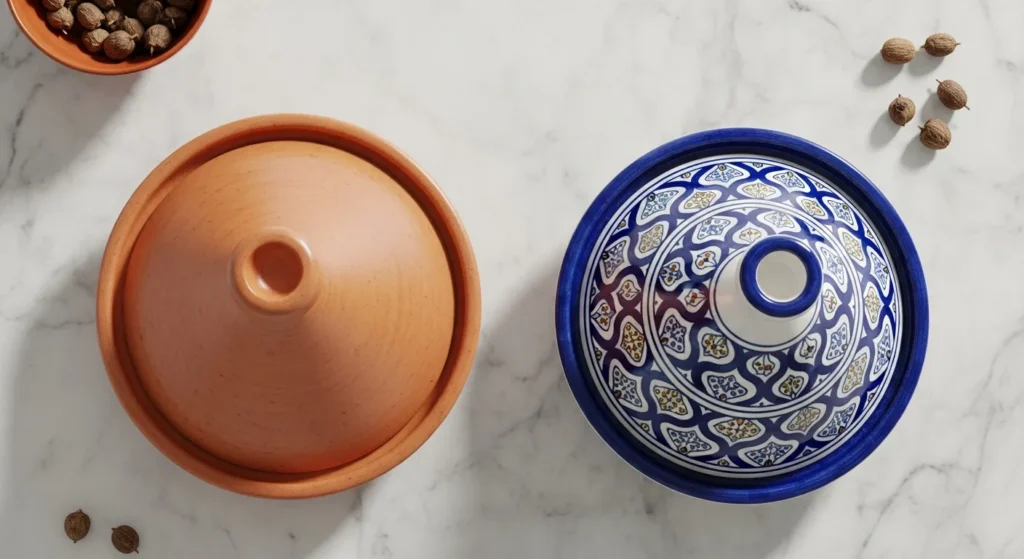
An unglazed tagine, also called a clay tagine or terracotta tagine, is made from natural, porous clay that has been fired but left in its raw state. The Eco Moroccan Clay Tagine is a perfect example—handcrafted using traditional methods, chemical-free, and designed specifically for cooking.
Key characteristics of unglazed tagines:
- Porous surface that absorbs flavors over time
- Natural clay color ranging from pale tan to deep terracotta
- Requires seasoning before first use
- Develops a patina that enhances cooking performance
- Excellent heat retention and even distribution
What Is a Glazed Tagine?
A glazed tagine features a glass-like coating that has been fused to the clay through high-temperature firing. This coating can be clear, colored, or decorated with intricate hand-painted designs like the Moroccan Handcrafted White Glazed Tagine.
Key characteristics of glazed tagines:
- Non-porous surface that doesn’t absorb flavors or odors
- Often decorated with vibrant colors and patterns
- Easier to clean and maintain
- No seasoning required
- May be designed for cooking, serving, or decoration
Glazed Tagine vs Clay Tagine: The Complete Comparison
| Feature | Unglazed Clay Tagine | Glazed Tagine |
|---|---|---|
| Primary Use | Cooking | Cooking, serving, or decoration |
| Seasoning Required | Yes, before first use | No |
| Flavor Development | Builds patina, enhances flavors | No flavor absorption |
| Cleaning | Warm water only, avoid soap | Mild soap acceptable |
| Durability | Sturdy but porous | Protected surface, less porous |
| Aesthetic | Rustic, natural | Decorative, colorful |
| Heat Sensitivity | Requires gradual heating | Varies by construction |
| Price Range | Generally more affordable | Varies widely |
Pros and Cons of Glazed Tagines
Advantages of Glazed Tagines
✔ Easy Maintenance – The non-porous surface doesn’t absorb odors or stains, making cleanup simple
✔ No Seasoning Required – Ready to use right out of the box
✔ Beautiful Presentation – Hand-painted designs make them stunning serving pieces
✔ Versatile Use – Many can go from stovetop to table to display shelf
✔ Odor Resistant – Strong spices like cumin and harissa won’t linger
Disadvantages of Glazed Tagines
✘ May Not Develop Flavor – Without absorption, you won’t build that coveted seasoned patina
✘ Glaze Quality Varies – Ensure any cooking tagine is certified lead-free and food-safe
✘ Some Are Decorative Only – Not all glazed tagines can withstand cooking heat
✘ Less Traditional Feel – Purists may prefer the authentic unglazed experience
Can You Cook in a Glazed Tagine?
Yes, but with an important caveat: only if it’s designed for cooking. Many glazed tagines are created specifically for serving or decoration and cannot withstand the heat of stovetop or oven cooking.
When shopping for a glazed cooking tagine, look for:
- Explicit labeling as “cooking tagine” or “stovetop safe”
- Lead-free and food-safe certification
- Heat-resistant construction
- Instructions for cooking use
The cooking tagines collection includes both glazed and unglazed options specifically designed for heat.
Unglazed Clay Tagine Benefits
For serious home cooks who want the most authentic experience, an unglazed tagine for cooking offers distinct advantages:
Superior Flavor Development
The porous clay absorbs oils, spices, and cooking juices over time. After dozens of meals, your tagine develops a unique “seasoning” that subtly enhances every dish. Many Moroccan families treasure tagines that have been in use for generations, each one carrying the flavor memories of countless meals.
Optimal Moisture Retention
The slightly porous surface interacts with steam differently than glazed surfaces, some cooks believe this creates a more nuanced, complex flavor in the final dish. The authentic terracotta tagine experience is hard to replicate with modern materials.
Traditional Cooking Experience
There’s something deeply satisfying about cooking with the same style of vessel that Berber communities have used for centuries. The earthy, natural feel connects you to a rich culinary heritage.
Natural and Eco-Friendly
Unglazed clay tagines like the Eco Moroccan Clay Tagine are made without chemicals or synthetic coatings. The natural clay is sustainable and biodegradable.
Traditional vs Modern Tagine: What’s Changed?
Traditional Tagines
Historically, tagines were:
- Made from locally sourced clay
- Fired in wood-burning kilns
- Left unglazed or minimally glazed
- Cooked over charcoal braziers (kanoun)
- Passed down through generations
Modern Adaptations
Today’s tagines have evolved to suit contemporary kitchens:
- Available in various materials (clay, ceramic, cast iron)
- Designed for gas, electric, and induction stovetops
- Feature vibrant decorative glazes
- Include heat diffuser compatibility
- Come in sizes from individual portions to large gatherings
The complete guide to using a tagine covers how to adapt traditional techniques to modern cooking environments.
Best Tagine for Beginners: Making the Right Choice
If you’re new to tagine cooking, here’s how to choose the right tagine based on your priorities:
Choose an Unglazed Clay Tagine If You:
- Want the most authentic cooking experience
- Enjoy the ritual of seasoning and caring for cookware
- Plan to cook tagine dishes regularly
- Appreciate natural, rustic aesthetics
- Want to develop a personalized, seasoned pot over time
Choose a Glazed Cooking Tagine If You:
- Prefer low-maintenance cookware
- Want a pot that doubles as a serving piece
- Cook strongly spiced dishes and want easy cleanup
- Value colorful, decorative kitchen pieces
- Are hesitant about the seasoning process
Best Tagine for Home Cooking: Our Recommendations
For regular home cooking, consider these factors:
For Authentic Enthusiasts: The Traditional Moroccan Clay Tagine offers the classic experience—food-safe, lead-free, and built for serious cooking.
For Modern Convenience: The Contemporary Moroccan Cooking Tagine for Two combines traditional design with modern functionality, perfect for couples or small households.
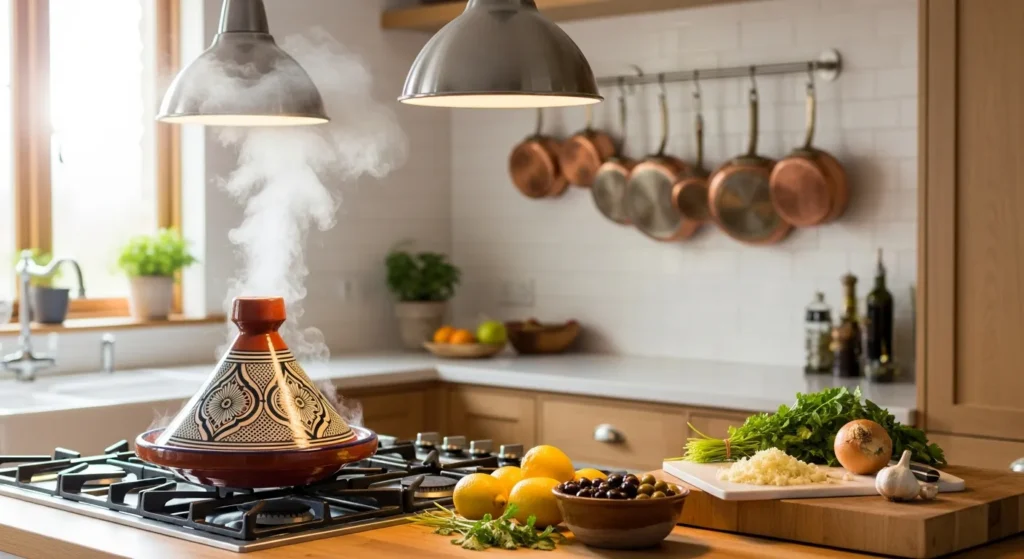
What Are Serving Tagines?
Not all tagines are meant for the stovetop. Serving tagines are designed specifically for presentation at the table, keeping food warm and creating dramatic visual impact.
Decorative Tagines
Decorative tagines are works of art hand-painted by master craftsmen. They’re perfect for:
- Serving couscous, salads, or room-temperature dishes
- Displaying as kitchen or dining room décor
- Gifting to food and culture enthusiasts
- Adding Moroccan ambiance to your space
Mini Tagines
Mini tagines serve multiple purposes:
- Individual portion serving
- Condiment and spice holders
- Table decorations
- Charming hostess gifts
The Moroccan Safi Triple Mini Tagine is a particularly elegant option, featuring three connected vessels perfect for serving olives, nuts, or dipping sauces.
Important: Never attempt to cook in a decorative or serving tagine. These pieces are not designed to withstand direct heat and may crack, release harmful substances, or become damaged.
How to Season an Unglazed Tagine
If you’ve chosen an unglazed tagine for cooking, proper seasoning is essential. This process:
- Removes any clay dust or residue
- Strengthens the pot against thermal shock
- Creates a protective layer that improves with use
The Seasoning Process
- Soak completely – Submerge the base and lid in water for 8-24 hours
- Dry thoroughly – Allow to air dry completely
- Apply olive oil – Rub a thin layer over all surfaces
- Heat gradually – Place in a cold oven, then heat to 225°F (110°C)
- Bake slowly – Maintain temperature for 2 hours
- Cool naturally – Turn off oven and let tagine cool inside
For detailed seasoning instructions, visit our complete guide on how to season a tagine.
Caring for Your Tagine: Quick Tips
Regardless of which type you choose, proper care ensures longevity. For comprehensive maintenance advice, see our complete Moroccan tagine care guide:
For Unglazed Tagines:
- Hand wash with warm water only
- Avoid soap when possible
- Dry completely before storing
- Re-season occasionally with olive oil
For Glazed Tagines:
- Hand wash with mild soap
- Avoid abrasive scrubbers
- Inspect glaze for chips or cracks
- Never use on direct high heat unless specified
To avoid common issues like thermal shock and cracking, learn why tagines crack and how to prevent it.
Pairing Your Tagine with Recipes
Once you’ve chosen your perfect tagine, it’s time to cook! Explore authentic recipes like:
- Chicken Tagine with Apricots and Almonds
- Fish Tagine with Preserved Lemons
- Beef Tagine with Apricots
The tagine spice guide will help you master the essential Moroccan seasonings that bring these dishes to life.
Final Thoughts: Embrace the Tagine Experience
Whether you choose a glazed or unglazed tagine, you’re investing in a piece of culinary heritage that connects you to centuries of Moroccan tradition. Each tagine in our collection is handcrafted by artisans who have inherited techniques passed down through generations—and by choosing authentically made cookware, you’re supporting over 2,000 artisans and their communities.
The “best” tagine isn’t about glazed versus unglazed—it’s about finding the piece that fits your cooking style, your kitchen, and your story. Browse our complete tagine collection to find yours, or learn more about our artisan partnerships and the communities behind every handcrafted piece.