Free Worldwide Shipping on Orders Over $150
Why Did My Tagine Crack? Causes, Prevention, and Expert Solutions

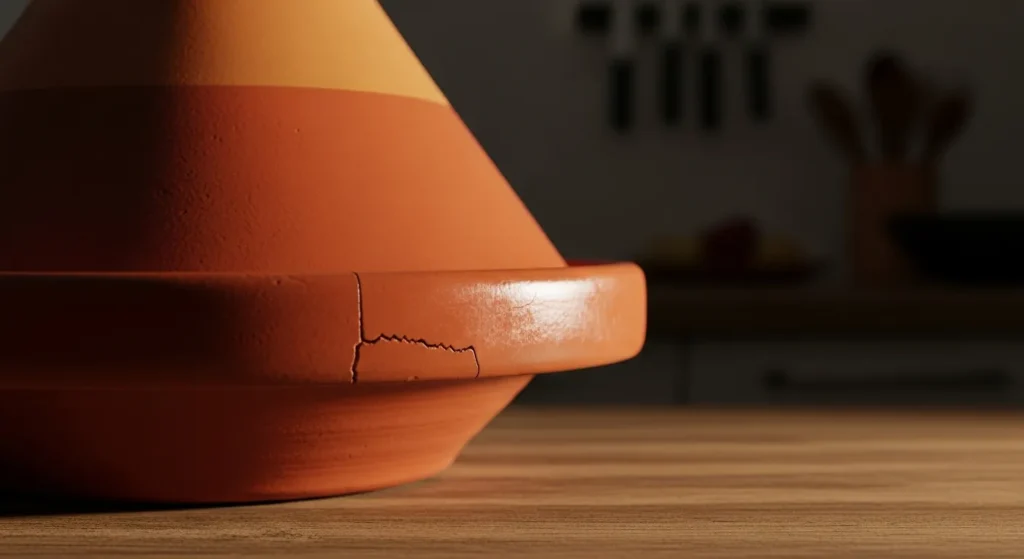
You’ve just invested in a beautiful handcrafted Moroccan tagine, excited to create your first aromatic slow-cooked dish. Then it happens—a sharp crack, a visible line running through the clay, and your heart sinks. “Why did my tagine crack?” is one of the most common questions we hear from home cooks, and the answer almost always comes down to one culprit: thermal shock.
The good news? A cracked tagine is almost entirely preventable. Understanding why clay pots crack and learning how to heat a tagine properly will save your cookware—and countless delicious meals—for years to come. Let’s explore the causes, solutions, and prevention techniques that will help you avoid breaking a clay tagine.
Understanding Why Tagines Crack
To prevent tagine cracking, you first need to understand what’s happening at a molecular level when clay meets heat.
The Science of Thermal Shock
Clay is a remarkable material—it retains heat beautifully, distributes it evenly, and imparts subtle earthy notes to food. But clay also has limitations. When exposed to sudden, extreme temperature changes, the material expands or contracts unevenly, creating stress fractures that manifest as cracks.
This phenomenon, called thermal shock, occurs when:
- A cold tagine is placed on high heat
- Cold liquid is added to a hot tagine
- A hot tagine is rinsed with cold water
- A tagine moves directly from refrigerator to stovetop
Why Clay Pots Are Susceptible
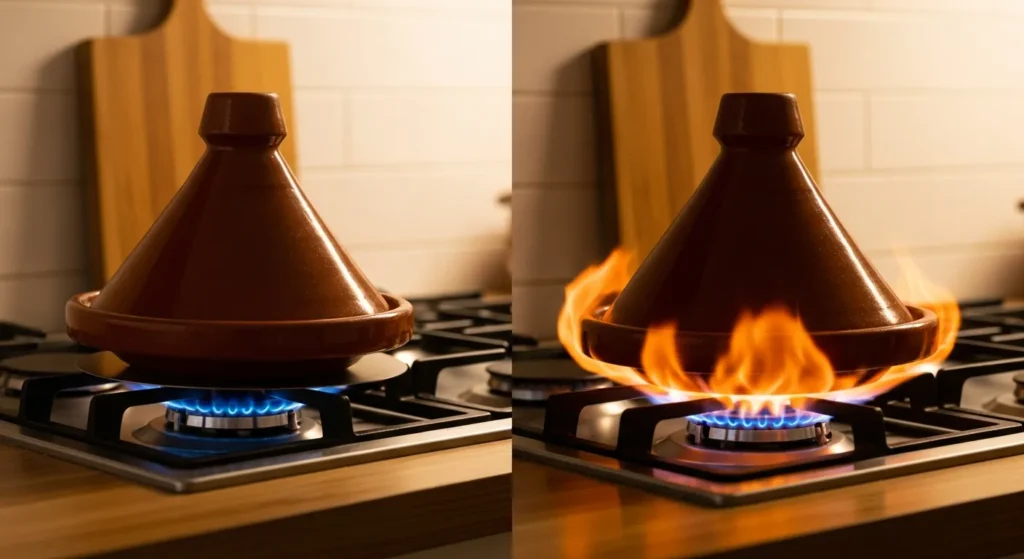
Unlike metal cookware that can handle rapid temperature swings, clay cookware requires patience. The traditional Moroccan tagine was designed for cooking over low charcoal heat—a gentle, gradual warming process that modern stovetops don’t naturally replicate.
The porous nature of unglazed clay adds another dimension. When clay absorbs moisture (which it should, as part of proper seasoning), that moisture expands when heated. Rapid heating doesn’t give this moisture time to release gradually, creating internal pressure that leads to cracks.
Common Tagine Cooking Mistakes That Cause Cracking
Most cracked tagines result from a handful of preventable mistakes. Here are the most common culprits:
Mistake #1: Skipping the Seasoning Process
The problem: New clay tagines need to be seasoned before first use. This process strengthens the clay and prepares it for cooking temperatures.
What happens: An unseasoned tagine is more brittle and prone to cracking, especially during its first few uses.
The solution: Always follow proper instructions on how to season a tagine. Soak the tagine in water for 8-24 hours, dry completely, apply olive oil, and heat gradually in the oven before your first stovetop use.
Mistake #2: Starting with High Heat
The problem: Placing a tagine on a hot burner or starting at high heat is the fastest path to a cracked tagine.
What happens: The bottom of the tagine heats rapidly while the rest remains cool, creating uneven expansion that stresses the clay.
The solution: Always start on the lowest heat setting. Increase temperature gradually over 10-15 minutes. Never use high heat with clay cookware.
Mistake #3: Not Using a Heat Diffuser
The problem: Direct contact between your tagine and a gas flame or electric coil concentrates heat in one spot.
What happens: Hot spots create localized stress that can crack even a well-seasoned tagine.
The solution: Use a heat diffuser for tagine cooking—an inexpensive tool that distributes heat evenly across the base.
Mistake #4: Adding Cold Ingredients to a Hot Tagine
The problem: Pouring cold broth, adding refrigerated vegetables, or placing cold meat into a preheated tagine.
What happens: The sudden temperature drop causes contraction shock that can crack the base.
The solution: Bring all ingredients to room temperature before adding to your tagine, or add them while the tagine is still cool and let everything heat together.
Mistake #5: Washing While Still Hot
The problem: Running water over a hot tagine to speed up cleaning.
What happens: The temperature shock is severe—often severe enough to split the clay completely.
The solution: Always let your tagine cool completely before washing. This takes 30-60 minutes.

My Tagine Cracked on First Use: What Went Wrong?
Having a tagine crack on first use is particularly frustrating—but it’s almost always due to one of two issues:
Issue 1: Insufficient Seasoning
If you skipped the seasoning process or abbreviated it, your tagine wasn’t prepared for heat. The clay needs that initial olive oil treatment and gradual heating to “cure” properly.
Issue 2: Too Much Heat, Too Fast
First-time tagine users often treat it like regular cookware, starting with medium or high heat. Clay requires a fundamentally different approach—think of it as cooking in slow motion.
What to Do If Your New Tagine Cracks
- Document the damage – Take photos for reference
- Review your technique – Identify what might have caused the crack
- Contact the seller – If the crack seems unusual or the tagine wasn’t advertised properly, reach out
- Consider replacement – A severely cracked tagine may not be safe for cooking
For authentic, properly crafted tagines that are designed for cooking, explore our cooking tagines collection—each piece is handcrafted by Moroccan artisans using time-tested methods.
My Tagine Broke While Cooking: Emergency Steps
If your tagine cracks mid-cook, safety comes first:
- Turn off the heat immediately
- Do not move the tagine until it cools slightly
- Carefully transfer food to another pot if needed
- Let the tagine cool completely before handling
- Dispose of food if any clay fragments may have entered it
Can a Cracked Tagine Be Repaired?
The answer depends on the severity:
Hairline Cracks
Minor surface cracks that don’t penetrate the full thickness can sometimes be “healed” through re-seasoning:
- Soak the tagine in water for 24 hours
- Dry completely
- Apply a generous coating of olive oil
- Heat very slowly in the oven at 225°F (110°C) for 2-3 hours
- Let cool in the oven
The oil can penetrate and seal minor cracks. However, monitor closely during your next few uses.
Deep Cracks
Cracks that go through the clay wall are not repairable for cooking purposes. The structural integrity is compromised, and the tagine could fail completely under heat. These tagines can still be used as:
- Decorative pieces
- Serving dishes for cold foods
- Garden planters
- Display items
How to Prevent Tagine Cracking: Best Practices
Prevention is far easier than repair. Follow these essential practices:
1. Always Season Before First Use
Never skip this step. Our complete guide on how to season a tagine walks you through proper seasoning technique.
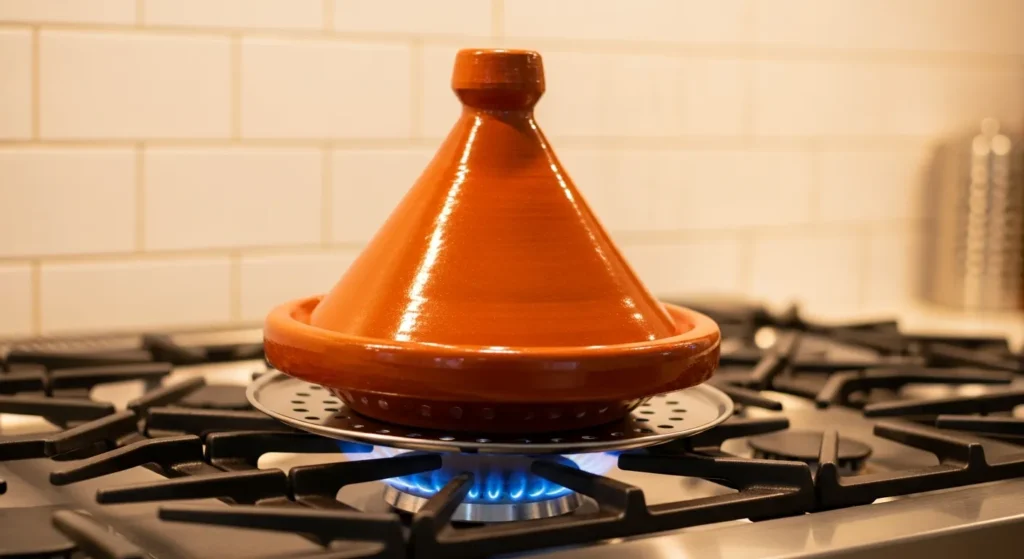
2. Use a Heat Diffuser for Tagine Cooking
A heat diffuser is the single most important tool for protecting clay cookware on modern stovetops. These affordable accessories:
- Distribute heat evenly across the tagine base
- Prevent hot spots that cause cracking
- Allow you to use slightly higher heat safely
- Work on gas, electric, and ceramic stovetops
3. Master the Low-and-Slow Approach
Tagine cooking is not about speed. Traditional Moroccan recipes like Chicken Tagine with Apricots are designed for hours of gentle simmering. Embrace this philosophy:
- Start on the lowest heat setting
- Increase gradually over 10-15 minutes
- Never exceed medium heat
- Let food simmer for 2-3 hours
4. Heat the Tagine Properly Every Time
Follow this sequence for every cooking session:
- Place tagine on heat diffuser on cold burner
- Turn heat to lowest setting
- Wait 5 minutes
- Increase to low heat
- Add room-temperature ingredients
- Wait 5 more minutes
- Increase to medium-low if needed
- Maintain steady, gentle heat throughout cooking
5. Handle Temperature Transitions Carefully
- Never add cold liquid to a hot tagine
- Never place a hot tagine on a cold surface
- Always use trivets or wooden boards
- Let tagine cool naturally—never rush it
6. Store Properly
Proper storage prevents stress cracks:
- Dry completely before storing
- Store lid separately with cloth between pieces
- Avoid stacking heavy items on top
- Keep in a temperature-stable location
For comprehensive maintenance and cleaning tips, read our Moroccan tagine care guide.
Choosing the Right Tagine to Minimize Cracking Risk
Not all tagines are created equal. When shopping, consider reading our guide on glazed vs unglazed tagines to understand the key differences, and look for:
Quality Clay Construction
The Eco Moroccan Clay Tagine is handcrafted using the traditional FRAN ALI method—a time-tested technique that produces durable, heat-resistant cookware.
Proper Cooking Designation
Ensure you’re buying a tagine specifically designed for cooking, not a decorative tagine which cannot withstand cooking heat.
Artisan Craftsmanship
Mass-produced tagines often have quality inconsistencies that make them more prone to cracking. Authentic handcrafted tagines from established pottery traditions (like those from Safi and Fez) are made with generations of knowledge about proper clay preparation and firing.
Frequently Asked Questions About Cracked Tagines
Can I still use a tagine with a hairline crack?
For minor surface cracks that don’t penetrate fully, you can try re-seasoning and using carefully. Monitor closely—if the crack worsens, retire the tagine from cooking.
Will a cracked tagine make my food unsafe?
If clay fragments could enter the food, it’s unsafe. Deep cracks can also harbor bacteria. When in doubt, use the tagine for decoration only.
How long should a tagine last?
A properly cared-for tagine can last decades or even generations. Many Moroccan families use the same tagines their grandparents used.
Are some tagines more crack-resistant than others?
Yes. Quality of clay, firing temperature, thickness, and craftsmanship all affect durability. Glazed cooking tagines may be slightly more resistant, but still require gentle heating.
Can I use my tagine in the oven instead?
Yes! Ovens provide gentle, even heat that’s ideal for tagine cooking. Start in a cold oven and heat gradually. Many cooks find this method reduces cracking risk.
Final Thoughts: Patience Is the Secret Ingredient
A cracked tagine teaches a valuable lesson that extends beyond cookware: some things cannot be rushed. The slow, gentle approach that protects clay from cracking is the same approach that creates the most delicious tagine dishes—layers of flavor developed over hours of patient simmering.
When you embrace the rhythm of tagine cooking—starting slow, building heat gradually, allowing time for transformation—you’ll not only protect your cookware but also create meals that carry the authentic spirit of Moroccan cuisine.
Ready to start fresh with a quality tagine? Explore our handcrafted cooking tagines made by artisans who understand the importance of proper clay preparation. And discover the essential Moroccan spices that will make your perfectly preserved tagine sing with flavor.