Free Worldwide Shipping on Orders Over $150
Can You Use a Tagine Without a Heat Diffuser? What You Need to Know

You’ve just unwrapped your first clay tagine, you’re eager to try it, and then you read the instructions: “Use a heat diffuser.” But you don’t own one—and you’re wondering if you really need one, or if you can skip straight to cooking. Can you use a tagine without a heat diffuser?
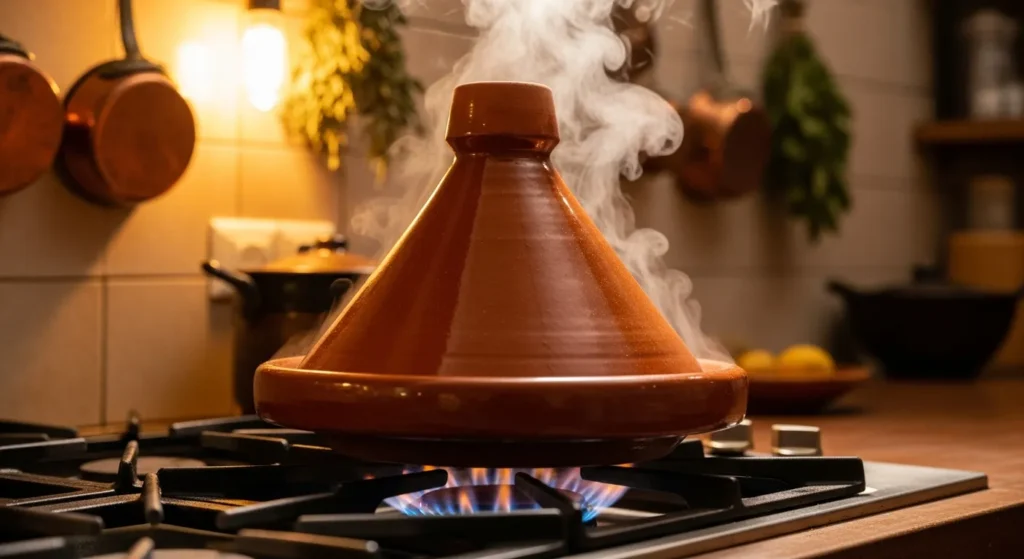
The short answer is yes, but with serious caveats. Whether you actually need a heat diffuser depends on your type of heat source, your tagine material, and your experience level. If you’re using a tagine for the first time, understanding this one detail can mean the difference between a perfect slow-cooked meal and a cracked pot headed for the trash.
This guide breaks down exactly when a heat diffuser is essential, when you can go without one, and how to safely cook with a tagine on every type of heat source.
What Is a Heat Diffuser and Why Does It Matter?
A heat diffuser (sometimes called a heat tamer or simmer plate) is a flat metal disc that sits between your stovetop burner and your cookware. Its job is simple but critical: it spreads concentrated heat from a burner into gentle, even warmth across the entire base of your tagine.
Why Clay Needs Protection
Traditional Moroccan tagines are made from clay—a material that excels at slow, even heat retention but is vulnerable to sudden temperature changes. When a gas flame or electric coil hits one spot on the base, the clay expands unevenly. This uneven stress is the primary cause of cracks in clay cookware.
A heat diffuser solves this by eliminating hot spots, giving the clay tagine a buffer zone of even warmth. Think of it as a translator between your modern stovetop and the ancient, patient cooking traditions the tagine was designed for.
Image Prompt for Heat Diffuser Section: Close-up of a round metal heat diffuser plate sitting on a gas stovetop burner, with a tagine base partially visible above it, showing the gap and the even flame distribution underneath, macro photography style, warm tones, clean and educational composition. 16:9 aspect ratio. Photorealistic style. NO text or words visible anywhere in the image.
Do You Need a Heat Diffuser? It Depends on Your Type of Heat
Not every stovetop poses the same risk to your tagine. Here’s a breakdown by heat source:
Gas Stovetops — Heat Diffuser Strongly Recommended
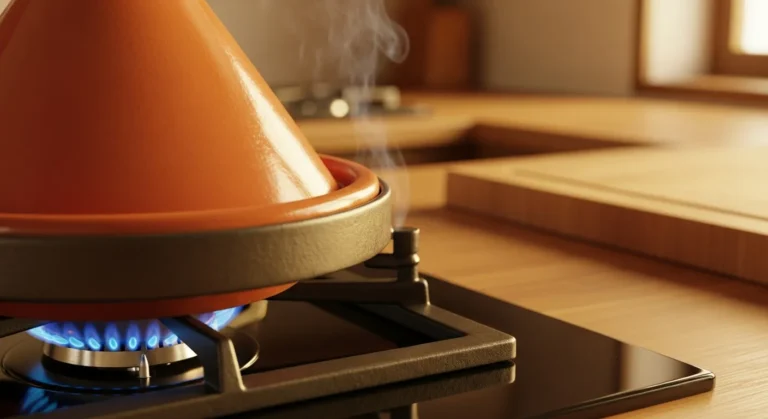
Gas burners produce an open flame that concentrates intense heat in a ring pattern directly beneath your tagine. Even on the lowest setting, gas delivers an aggressive, uneven heat that clay was never designed to handle directly.
Without a diffuser: High risk of cracking, especially at the center and edges where flame contact is strongest.
With a diffuser: The flame heats the metal plate evenly, which then transfers gentle warmth across the full base of the tagine. This mimics the radiant charcoal heat used in traditional Moroccan cooking.
Verdict: A heat diffuser for tagine cooking on gas is practically essential.
Electric Coil Stovetops — Heat Diffuser Recommended
Electric coil burners heat unevenly by nature—the coil itself is extremely hot while the gaps between coils remain cooler. This creates pronounced hot spots that stress clay.
Without a diffuser: Moderate to high risk of cracking, plus uneven cooking.
With a diffuser: Smooths out the uneven coil pattern and provides consistent heat distribution.
Verdict: Strongly recommended, especially for unglazed clay tagines. Learn more about the differences in our glazed vs unglazed tagine guide.
Ceramic / Glass-Top Stovetops — Heat Diffuser Optional
Ceramic and glass-top electric stovetops deliver heat more evenly than coils or gas. The flat surface provides broad, relatively uniform contact with your tagine’s base.
Without a diffuser: Lower risk if you start on the lowest setting and increase gradually. However, clay can still scratch glass surfaces.
With a diffuser: Adds an extra layer of protection for both the tagine and the stovetop surface. Also prevents the rough bottom of an unglazed tagine from scratching the glass.
Verdict: Optional, but still a smart precaution—especially if you’re using a tagine for the first time.
Induction Stovetops — Special Considerations
Standard clay tagines will not work on induction stovetops because induction requires magnetic cookware. However, a cast iron or stainless steel heat diffuser plate can solve this problem. The induction heats the diffuser, which then gently transfers warmth to the tagine.
Verdict: A heat diffuser is the only way to use a clay tagine on induction.
Oven — No Heat Diffuser Needed
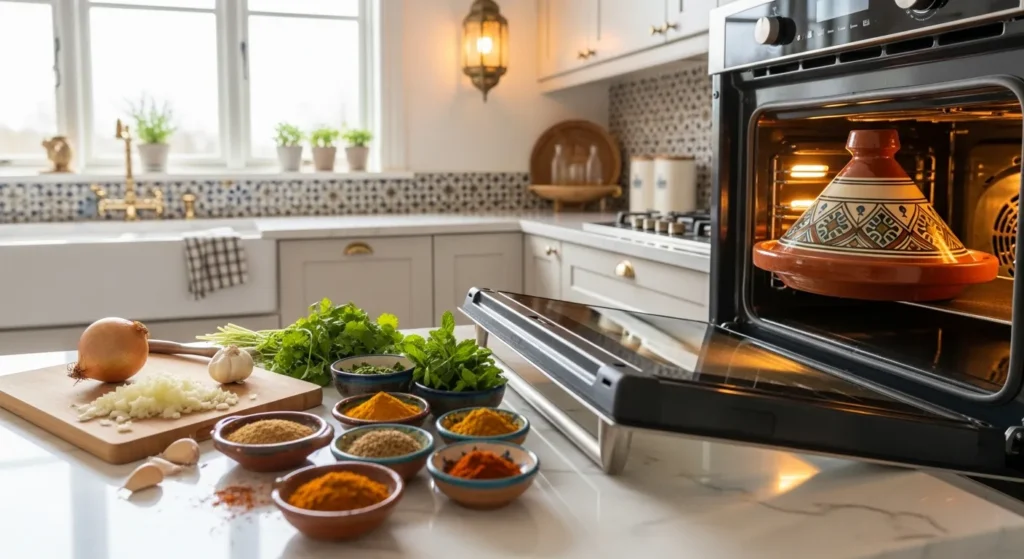
An oven provides gentle, surrounding heat from all directions—the safest environment for a clay tagine. Place it in a cold oven and let both heat up gradually together.
Verdict: No diffuser needed. This is the most forgiving method and ideal for beginners.
Using a Tagine for the First Time: Step-by-Step Guide
If this is your first time cooking with a tagine, taking a careful approach will protect your cookware and set you up for success.
Step 1: Season Your Tagine First
Before any cooking happens, you must season your new tagine. This essential process strengthens the clay, fills its pores with protective oil, and prepares it for heat:
- Soak the base and lid in water for 8–24 hours
- Dry completely
- Rub with a thin coat of olive oil
- Place in a cold oven, then heat gradually to 225°F (110°C)
- Bake for 2 hours
- Cool naturally in the oven
Skipping this step is one of the most common reasons tagines crack during their first use.
Step 2: Set Up Your Heat Source
- Place a heat diffuser on the burner (if using gas or electric)
- Set the tagine on the diffuser while everything is still cold
- Turn the heat to the absolute lowest setting
- Wait 5–10 minutes before increasing to low
Step 3: Build Your Dish
Add your ingredients while the tagine is still cool or barely warm:
- Add a drizzle of olive oil to the base
- Layer your aromatics—onions, garlic, spices
- Add your protein and vegetables
- Pour in broth or water (at room temperature, never cold)
- Place the lid on top
Step 4: Cook Low and Slow
- Keep the heat at low to medium-low throughout
- Resist the urge to lift the lid frequently—the self-basting cycle is doing its job
- Cook for 1.5 to 3 hours depending on the recipe
For your first dish, try a classic like Chicken Tagine with Vegetables—a forgiving recipe that delivers impressive results even for beginners.
Step 5: Cool Down Properly
After cooking:
- Turn off the heat and let the tagine sit on the diffuser
- Allow 30–60 minutes of gradual cooling
- Never run cold water over a hot tagine
- Follow our tagine care guide for proper cleaning and storage
What Happens If You Skip the Heat Diffuser?
Using a tagine without a heat diffuser isn’t automatically a disaster—but it does increase risks:
Best-Case Scenario
On a low-heat ceramic stovetop or in an oven, your tagine may cook perfectly without a diffuser. Someone experienced with clay cookware who maintains very low, gradual heat can sometimes manage just fine.
Worst-Case Scenario
On a gas or electric coil burner without a diffuser:
- Hairline cracks that develop gradually and worsen over time
- Full cracks that split the base mid-cooking
- Uneven cooking with burned spots on the bottom and undercooked areas elsewhere
- Food waste if the tagine fails during cooking
The risk is highest when you’re using a tagine for the first time, before the clay has been strengthened through repeated use and seasoning.
Choosing the Right Heat Diffuser
Not all heat diffusers are equal. Here’s what to look for:
Material
- Cast iron – Heavy, excellent heat distribution, most durable
- Stainless steel with aluminum core – Lighter, good distribution
- Perforated metal – Budget option, adequate but less even
Size
Choose a diffuser at least as wide as the base of your tagine. A diffuser that’s too small will leave the edges exposed to uneven heat.
Compatibility
- Gas: Any diffuser works
- Electric coil: Flat-bottomed diffusers work best
- Ceramic/glass: Ensure the diffuser won’t scratch the surface
- Induction: Must be induction-compatible (ferromagnetic metal)
Alternative Methods If You Don’t Have a Heat Diffuser
No diffuser on hand? These workarounds can help in a pinch:
Use the Oven Instead
The safest alternative. Place your tagine in a cold oven, set to 300–325°F (150–160°C), and let it heat gradually. This provides the gentle, even heat clay loves.
Use a Cast Iron Skillet
Place a flat cast iron skillet or griddle on the burner, then set your tagine on top. It acts as an improvised diffuser, spreading heat more evenly.
Try a Wok Ring
A metal wok ring can elevate your tagine slightly above a gas flame, reducing direct contact. Not as effective as a proper diffuser, but better than nothing.
Lower the Heat Even Further
If cooking directly on a burner, keep the heat as low as your stovetop allows—barely a whisper of flame on gas. This won’t eliminate hot spots, but it minimizes the temperature differential that causes cracking.
Important: These are temporary solutions. If you plan to cook with your tagine regularly, investing in a proper heat diffuser is the best way to protect your handcrafted cookware.
Tagine Material and Heat Diffuser Requirements
Your tagine’s material affects how essential a heat diffuser truly is:
| Tagine Type | Heat Diffuser Needed? | Why |
|---|---|---|
| Unglazed clay | Strongly recommended | Most porous and heat-sensitive |
| Glazed clay | Recommended | Glaze adds protection but clay is still vulnerable |
| Cast iron tagine | Not needed | Metal handles heat fluctuations without issue |
| Ceramic | Recommended | Similar sensitivity to clay |
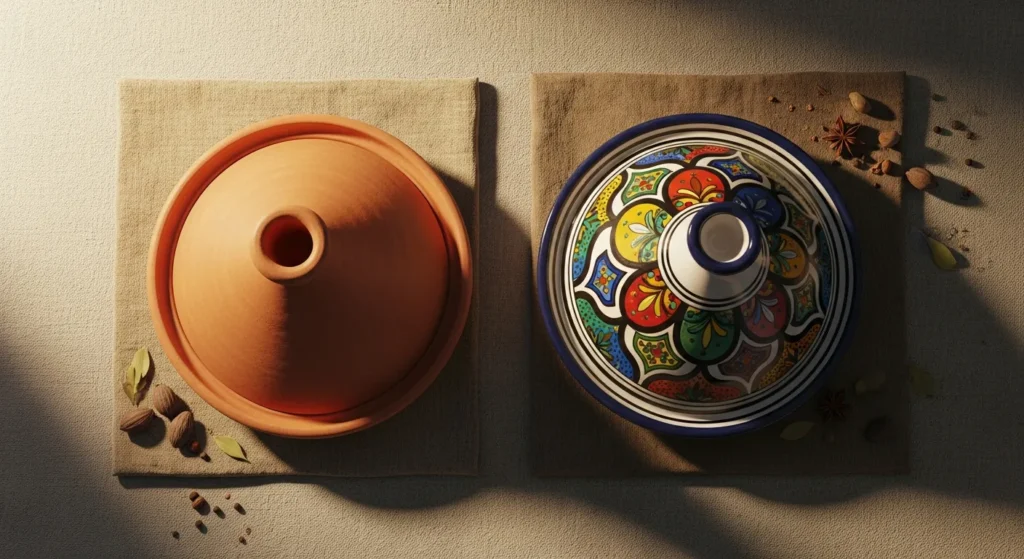
For a deeper comparison of how material affects performance, see our guide on glazed vs unglazed tagines.
Frequently Asked Questions
Can I use a tagine directly on a gas stove?
Technically yes, but it’s risky without a heat diffuser. Gas flames create concentrated hot spots that can crack clay. If you must cook without a diffuser, use the absolute lowest flame setting and expect higher risk.
How do I know if my tagine is oven-safe?
Most cooking tagines are oven-safe. However, decorative tagines are not designed for any heat source. Always verify your tagine is labeled for cooking use.
Will a heat diffuser make my tagine cook slower?
Slightly, since the diffuser adds an extra layer between the heat and the tagine. However, tagine cooking is inherently slow—an extra few minutes makes no practical difference and dramatically improves safety.
Do I need a heat diffuser every single time?
For gas and electric coil stovetops, yes—every time. For ceramic tops, it’s a good habit. For oven cooking, no.
Final Thoughts: One Small Tool, One Big Difference
A heat diffuser costs a fraction of what your handcrafted Moroccan tagine is worth—yet it’s the single most effective tool for protecting your investment. It bridges the gap between modern stovetop technology and the ancient cooking traditions that gave us the tagine in the first place.
Whether you’re cooking your first tagine dish or your hundredth, a heat diffuser ensures every meal ends with delicious food on the table—not a cracked pot in the bin. Explore our complete tagine guide for more expert tips, or browse the essential Moroccan spice guide to start building unforgettable flavor.