Free Worldwide Shipping on Orders Over $150
How to Season a Tagine: Complete Guide for First-Time Use

Learning how to season a tagine is the essential first step before you can unlock the full potential of this iconic Moroccan cooking vessel. Whether you’ve just received a beautiful handcrafted clay pot or inherited a family heirloom, proper seasoning ensures your tagine won’t crack under heat and will deliver those deeply aromatic, tender stews for years to come.
The centuries-old tradition of tagine cooking has been passed down through generations of Moroccan families, and seasoning the pot is a ritual that connects you to this rich culinary heritage. In this comprehensive guide, you’ll discover exactly how to prepare a tagine for first use, understand the difference between glazed and unglazed tagine seasoning, and learn the essential care techniques that will protect your investment.
Why Seasoning Your Tagine Matters
Before you begin slow-cooking fragrant lamb stews or aromatic chicken dishes, your clay tagine needs proper preparation. But what happens if you don’t season a tagine? The consequences can be disappointing—and costly.
An unseasoned clay cooking pot is porous and vulnerable to thermal shock. When exposed to direct heat without seasoning:
- Cracks and fractures may develop during your first cooking session
- Flavors won’t develop properly as the raw clay absorbs moisture unevenly
- Durability decreases significantly, shortening the lifespan of your cookware
- Food may stick to the unprotected surface
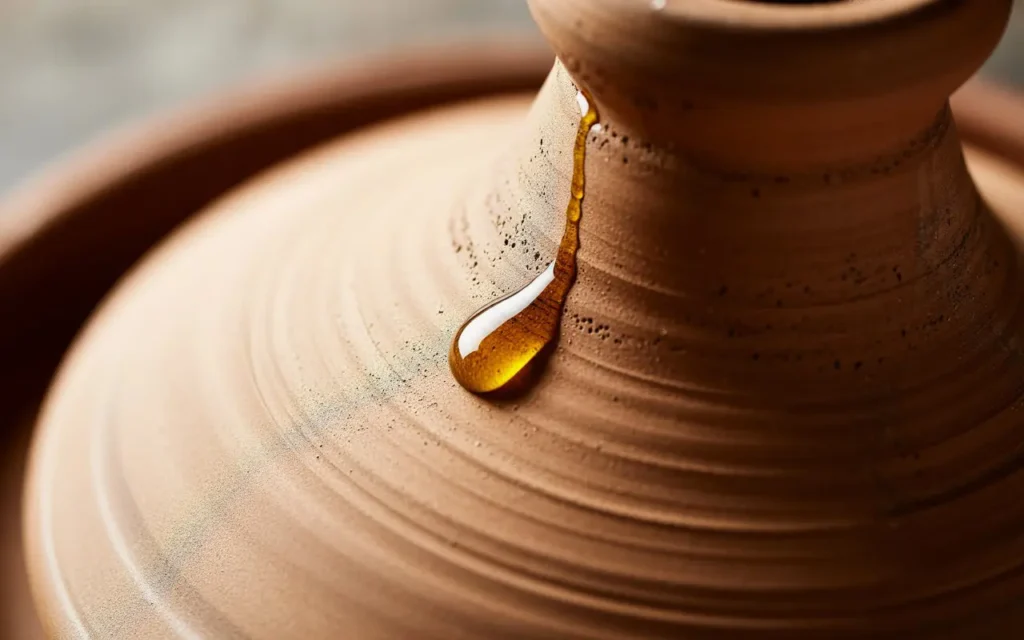
The seasoning process fills the microscopic pores in terracotta cookware with oil, creating a natural non-stick barrier while strengthening the clay’s resistance to heat. Think of it as giving your tagine a protective coating that prepares it for a lifetime of delicious meals.
Understanding Your Tagine: Glazed vs. Unglazed
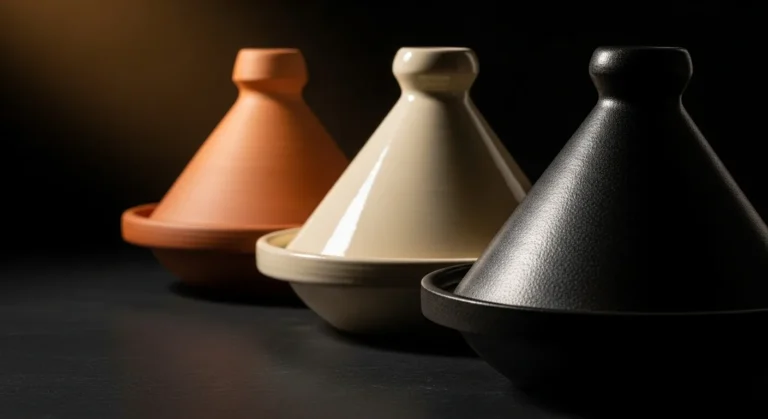
Before you begin seasoning a tagine for the first time, you need to identify what type you own. The process differs significantly depending on whether you have a glazed or unglazed tagine.
Unglazed Clay Tagines
Traditional Moroccan cooking tagines are typically made from natural, unglazed clay. These authentic vessels:
- Require complete seasoning before first use
- Offer superior heat retention and circulation
- Develop a natural patina over time that enhances flavor
- Are the choice of traditional Moroccan cooks for centuries
The FRAN ALI pottery method and similar traditional techniques produce unglazed tagines that, when properly seasoned, become better with each use.
Glazed Clay Tagines
Glazed tagines feature a protective ceramic coating that:
- Requires less intensive seasoning (sometimes just a brief soak)
- Provides built-in moisture protection
- Is easier to clean and maintain
- Still benefits from a light oil treatment before first use
Difference Between Glazed and Unglazed Tagine Seasoning
| Aspect | Unglazed Tagine | Glazed Tagine |
|---|---|---|
| Soaking Time | 8-24 hours | 1-2 hours (optional) |
| Oil Application | Essential—generous coating | Light coating recommended |
| Oven Time | 2+ hours at low heat | 30-60 minutes |
| Repeat Seasonings | May need periodic re-seasoning | Rarely needed |
| Porosity | High—absorbs moisture and flavors | Low—sealed surface |
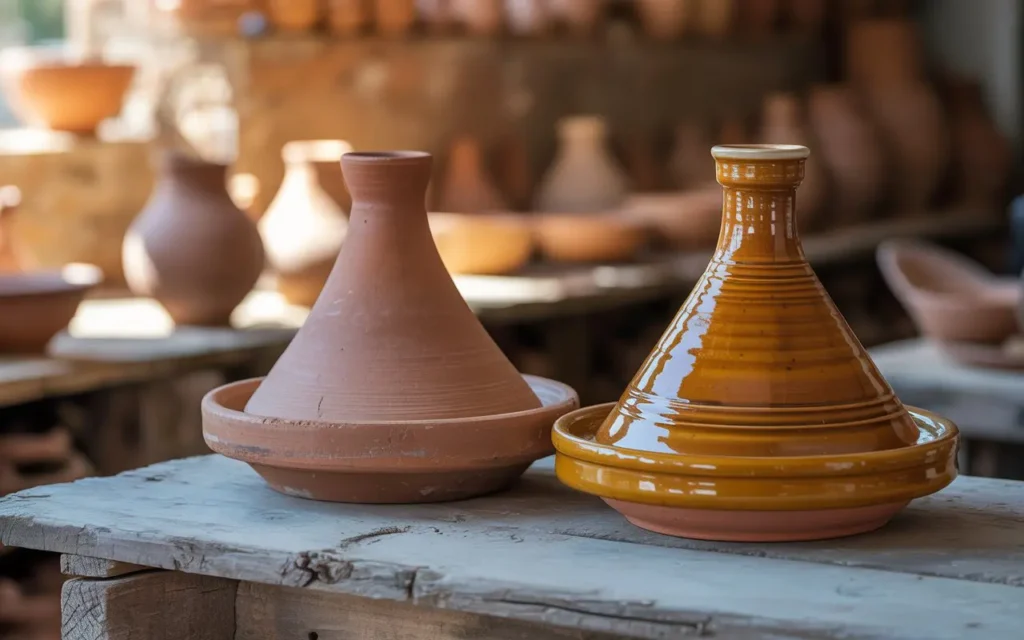
How to Season a Moroccan Tagine: Step-by-Step Guide
Now let’s walk through the complete process to cure a tagine before cooking. This authentic Moroccan tagine preparation method has been perfected over centuries.
What You’ll Need
- Your new clay tagine (base and lid)
- Large basin or sink
- Room temperature water
- High-quality olive oil
- Soft brush or cloth
- Your oven
Step 1: Soak the Tagine
Begin by completely submerging both the base and conical lid in room temperature water. This is the foundation of proper seasoning:
- For unglazed tagines: Soak for 8 to 24 hours (overnight is ideal)
- For glazed tagines: Soak for 1 to 2 hours
The water slowly saturates the clay, preparing it to accept the oil treatment. This soaking also helps prevent cracking by allowing the clay to absorb moisture gradually rather than experiencing sudden temperature changes.
Step 2: Dry Completely
Remove the tagine from the water and pat it dry with a clean cloth. Then, allow it to air dry completely—this may take several hours or overnight. The tagine must be bone dry before applying oil.
Step 3: Apply Olive Oil
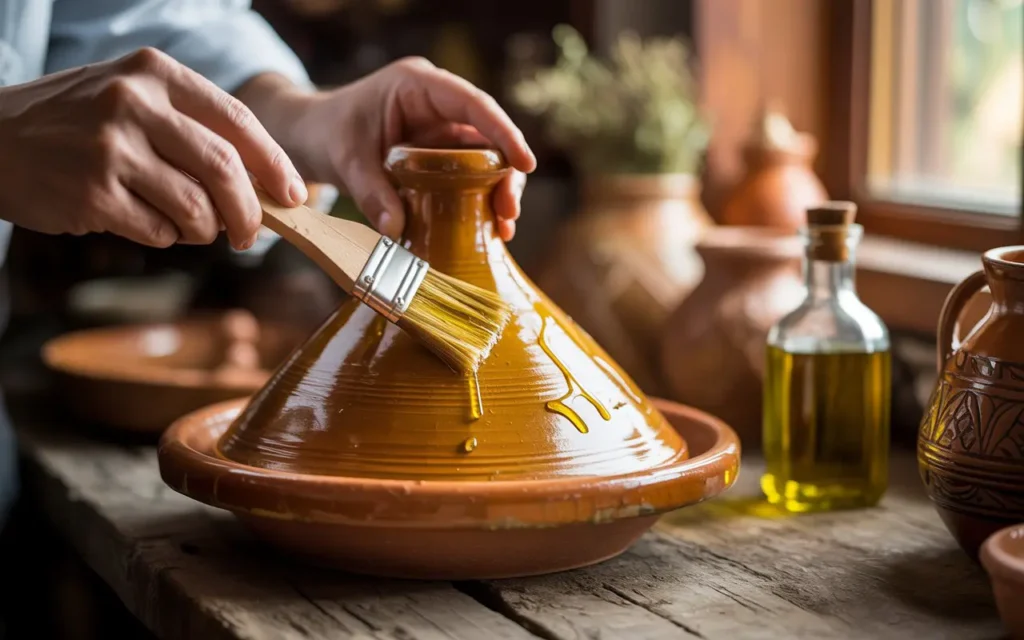
Using a soft brush or clean cloth, generously coat the entire surface of both the base and lid with olive oil:
- Cover the inside and outside of the base
- Coat the inside and outside of the lid
- Don’t forget the rim and handle
- Use enough oil so the surface appears saturated but not dripping
High-quality olive oil works best for seasoning terracotta cookware, as it’s the traditional choice used by Moroccan potters for generations. The oil penetrates the pores, creating that essential protective barrier.
Step 4: Low-Temperature Oven Bake
Place your oiled tagine in a cold oven—this is critical for preventing thermal shock:
- Position both pieces in the cold oven
- Set temperature to 225°F (110°C)
- Allow the oven to heat gradually with the tagine inside
- Bake for 2 hours at this low temperature
- Turn off the oven but keep the door closed
- Let the tagine cool completely inside the oven (several hours or overnight)
The gradual heating and cooling cycle allows the oil to cure into the clay, creating a durable, heat-resistant finish.
How Long Does It Take to Season a Tagine?
From start to finish, expect the complete seasoning process to take:
- Soaking: 8-24 hours
- Drying: 2-8 hours
- Oven seasoning: 2 hours active + 4-8 hours cooling
- Total: Approximately 24-48 hours
While this may seem lengthy, remember that you’re preparing your tagine for decades of use. This investment of time ensures your handmade Moroccan tagine will deliver authentic results for years to come.
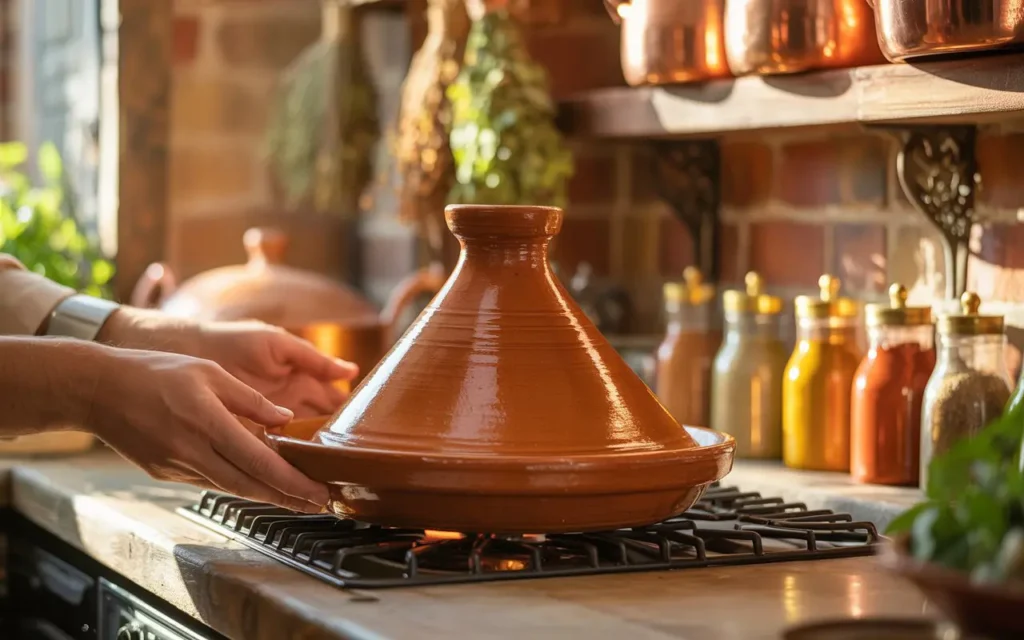
How to Prevent Tagine Cracking
One of the most common concerns for new tagine owners is preventing cracks. Understanding how to prevent tagine cracking will protect your investment and ensure many years of cooking pleasure.
Essential Tips to Protect Your Tagine
- Always start with low heat and increase gradually
- Never place a cold tagine on high heat or in a preheated oven
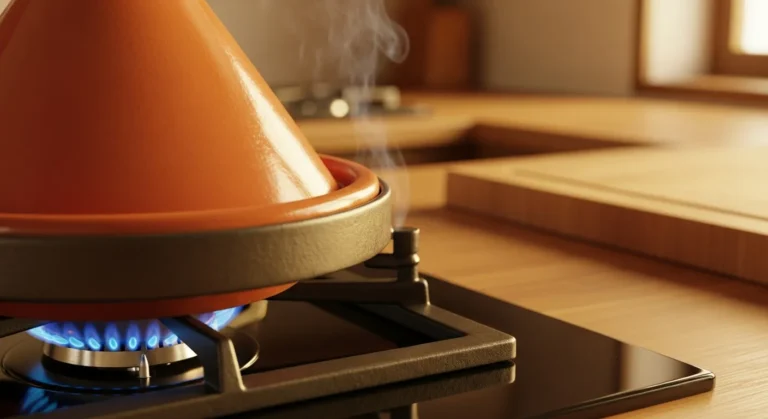
- Use a heat diffuser on gas or electric stovetops
- Avoid thermal shock—don’t add cold liquid to a hot tagine
- Re-season periodically with a light oil coating if using frequently
- Store properly in a dry location with the lid slightly askew for air circulation
Traditional tagine cooking uses low and slow heat—this isn’t just for flavor; it protects the clay. Cooking on medium-low heat for several hours is far better than high heat for a short time.
Signs Your Tagine Needs Re-Seasoning
Watch for these indicators that suggest another round of seasoning is needed:
- The surface appears dry or chalky
- Food begins sticking during cooking
- Small hairline cracks appear (season immediately to prevent spreading)
- The tagine has been stored unused for extended periods
How to Clean a Tagine After Seasoning (and After Cooking)
Proper cleaning is essential for maintaining your seasoned tagine. Here’s the Moroccan tagine care guide you need:
Cleaning After Initial Seasoning
- Allow the tagine to cool completely in the oven
- Wipe with a dry cloth to remove any excess oil
- Your tagine is now ready for its first culinary adventure
Cleaning After Cooking
- Let the tagine cool to room temperature naturally
- Hand-wash only—never use a dishwasher
- Use warm water and a soft sponge
- Avoid harsh detergents; use mild dish soap sparingly or just warm water
- For stubborn residue, soak in warm water before cleaning
- Dry thoroughly before storing
- Apply a light coating of olive oil if storing for extended periods
Never scrub with abrasive materials or use cold water on a warm tagine—both can damage the seasoned surface or cause cracking.
First Cooking Session: Putting Your Seasoned Tagine to Work
Once your tagine is properly seasoned, you’re ready to begin your journey into authentic Moroccan cooking. For your first dish, consider a simple recipe that showcases the tagine’s capabilities.
A classic vegetable tagine or chicken tagine with vegetables is an excellent starting point. The gentle cooking process and aromatic spices will begin building that treasured patina on your newly seasoned pot.
Tips for Your First Cook
- Use a heat diffuser on your stovetop
- Start with low heat for the first 15-20 minutes
- Add your oil and aromatics before heating
- Never preheat an empty tagine
- Cook with the lid on to utilize the self-basting design
The conical lid’s genius is in trapping steam that condenses and falls back into the dish—this is what creates those incredibly tender, flavorful results. Learn more about what makes the tagine special in our complete guide.
Clay Tagine Recipes to Try After Seasoning
Once you’ve mastered the seasoning process, explore these classic tagine recipes that showcase your cookware’s capabilities:
- Lamb Tagine with Prunes and Apricots – The classic sweet and savory combination
- Chicken Tagine with Preserved Lemons and Olives – Bright, tangy, and aromatic
- Vegetable Tagine with Chickpeas – A hearty vegetarian option
- Fish Tagine with Chermoula – Light and herb-forward
Each dish benefits from the essential Moroccan spices that define this cuisine: cumin, coriander, turmeric, ginger, cinnamon, and paprika.
Frequently Asked Questions
Can I season a tagine in a microwave?
No, never use a microwave to season a tagine. The clay requires gradual, even heating that only a conventional oven provides. Microwave heating is uneven and can cause immediate cracking.
Do decorative tagines need seasoning?
Decorative tagines are designed for serving and display, not cooking. They typically have glazed surfaces with decorative paints that aren’t food-safe at high temperatures. Only season tagines specifically designed for cooking.
How often should I re-season my tagine?
With regular use, a well-maintained tagine may only need re-seasoning once or twice a year. If you cook weekly, a light oil treatment after cleaning helps maintain the patina. After extended storage, a full re-seasoning is recommended.
Can I use vegetable oil instead of olive oil?
While olive oil is traditional and recommended, you can use other neutral oils with high smoke points. However, olive oil’s properties make it ideal for seasoning terracotta cookware.
My tagine has a crack—can I still use it?
Small hairline cracks can sometimes be stabilized by re-seasoning immediately. However, if the crack extends through the clay or affects structural integrity, the tagine may no longer be safe for cooking. Consider repurposing it for serving cold dishes or as a decorative piece.
Bring Morocco to Your Kitchen
Seasoning your tagine is more than preparation—it’s your first step in joining a centuries-old culinary tradition. The artisans who crafted your tagine in Morocco’s historic pottery cities like Safi and Fez have passed down these techniques for generations, and now you’re becoming part of that story.
Ready to start your tagine cooking journey? Explore our collection of authentic handmade Moroccan cooking tagines crafted by master artisans using traditional methods. Each piece supports the community of over 2,000 artisans who keep this beautiful tradition alive.