Free Worldwide Shipping on Orders Over $150
How to Re-Season a Tagine: Restore Your Clay Pot to Perfect Condition

Your tagine has served you well—dozens of slow-cooked stews, fragrant spice-laden dinners, and meals shared around the table. But lately, food is sticking more than usual, the clay feels dry, or maybe you gave in and scrubbed it with soap after a particularly stubborn dish. Whatever the reason, your clay tagine is telling you it’s time for a refresh.
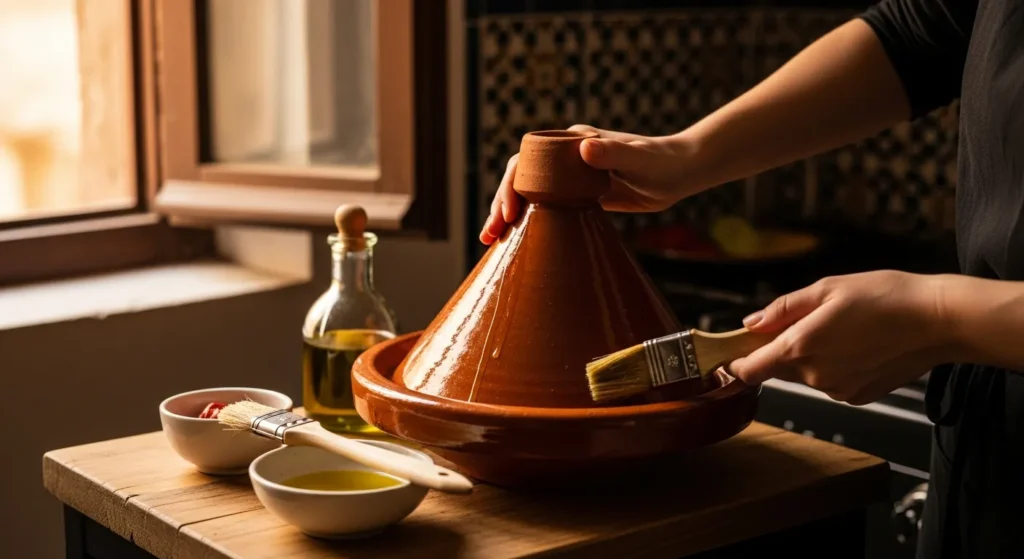
Re-seasoning a tagine isn’t complicated, but it is essential. Just like a cast iron skillet needs periodic re-seasoning, a clay tagine requires the same kind of attention to maintain its cooking performance and extend its lifespan. This guide walks you through the complete Moroccan tagine reseasoning process, when to do it, why it matters, and how to cure a tagine pot back to its best.
Why Re-Season a Tagine?
When you first seasoned your tagine, you filled the pores of the clay with oil and gradually strengthened it against heat. Over time, that protective layer breaks down. Here’s why:
Natural Wear
Every cooking session slowly degrades the oil that saturates the clay. High-acid ingredients like tomatoes and preserved lemons accelerate this process. Eventually, the clay’s natural porosity is re-exposed, leading to sticking, uneven heating, and increased vulnerability to cracking.
Deep Cleaning
Sometimes a tagine needs a thorough scrub—especially after burnt food or when switching between strongly flavored dishes. As our tagine care guide explains, harsh cleaning can strip the seasoned layer from unglazed clay.
Extended Storage
A tagine sitting unused for months can dry out. The oils that once protected the clay evaporate, leaving it brittle and prone to thermal shock.
After Repairs
If your tagine developed hairline cracks and you soaked it for repair, the extended water exposure displaces the seasoning oils. Re-seasoning afterward is essential to restore protection.
Signs Your Tagine Needs Re-Seasoning
Not sure if your tagine actually needs attention? Look for these indicators:
- Food sticks to the base more than usual
- The clay looks pale or chalky instead of having a rich, oily sheen
- Flavors seem flat compared to earlier cooking sessions
- The surface feels rough or gritty rather than smooth
- Water absorbs quickly when you splash a few drops on the interior—a well-seasoned tagine will bead water slightly before absorption
- You used soap or abrasive cleaners during the last wash
- The tagine hasn’t been used in three months or more
If you’re experiencing one or two of these, a light touch-up may suffice. If several apply, a full re-season is in order.
How to Re-Season a Tagine: Full Method
This process mirrors the initial tagine seasoning but is adapted for a pot that already has history. Follow each step carefully—patience is the key ingredient.
What You’ll Need
- Your tagine (base and lid)
- A basin or sink large enough to submerge the tagine
- Extra virgin olive oil (preferred) or another food-safe vegetable oil
- A soft cloth or pastry brush
- An oven
- Time: approximately 4–6 hours total (mostly passive)
Step 1: Clean Thoroughly
Before re-seasoning, you need a clean surface for the oil to bond with:
- Soak the tagine in warm water for 15–30 minutes to loosen any residue
- Scrub gently with a soft brush or cloth—no steel wool, no harsh chemicals
- For stubborn residue, make a paste with baking soda and water, apply, and let sit for 20 minutes before rinsing
- Rinse thoroughly with warm water
- Air dry completely — this is critical. Any trapped moisture will create steam pockets during heating and could cause cracking
Tip: If you need to remove stubborn odors from previous dishes, soak the tagine in a 50/50 mix of water and white vinegar for one hour before the cleaning step.
Step 2: Soak in Water
Once clean and dry, it’s time to rehydrate the clay:
- Submerge the entire tagine (base and lid) in room-temperature water
- Soak for 2–4 hours — this allows the clay to absorb moisture evenly
- Remove and dry completely — let it air dry for at least 2–3 hours, or until no dampness remains
This soaking step rehydrates the pores of the clay, preparing them to absorb and retain the oil in the next step. It also gradually strengthens the clay’s resistance to thermal expansion.
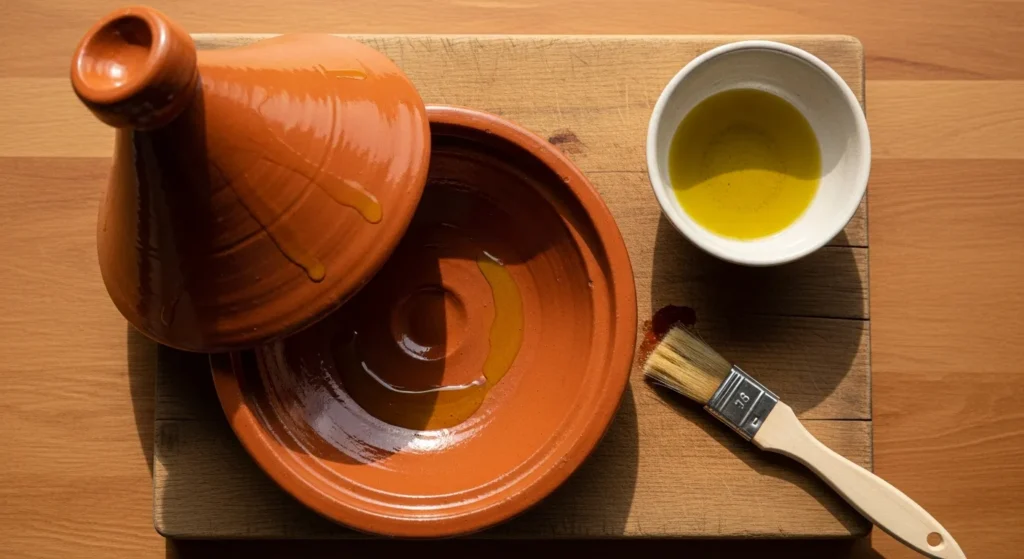
Step 3: Apply Oil Generously
Now comes the heart of the Moroccan tagine reseasoning process:
- Pour a small amount of olive oil into your palm or a dish
- Rub oil over every surface — inside and outside of both the base and the lid
- Pay special attention to the interior cooking surface and the inside of the lid (where condensation forms)
- Apply a thin, even coat — you want full coverage, not pooling oil
- Let the oil soak in for 15–20 minutes, then apply a second thin coat
Why olive oil? It’s the traditional choice used by Moroccan artisans for generations. Its fatty acid profile bonds well with clay, creating a durable, food-safe protective layer.
Step 4: Heat Slowly in the Oven
This is the curing step—where the oil polymerizes into a protective layer:
- Place the tagine in a cold oven — base on the rack, lid beside it (or inverted on top)
- Set the oven to 225°F (110°C)
- Heat for 2 hours at this temperature
- Do not open the oven door during heating
- After 2 hours, turn off the oven
- Leave the tagine inside the oven to cool naturally — this can take 2–3 hours
The gradual heating allows the oil to be drawn deep into the clay’s pores while the clay gently strengthens. The slow cool-down prevents any thermal stress.
Important: Never place a cold tagine into a preheated oven. Always start cold and heat together—this is the same principle covered in our guide on preventing tagine cracks.
Step 5: Inspect and Repeat If Needed
Once cooled, examine your tagine:
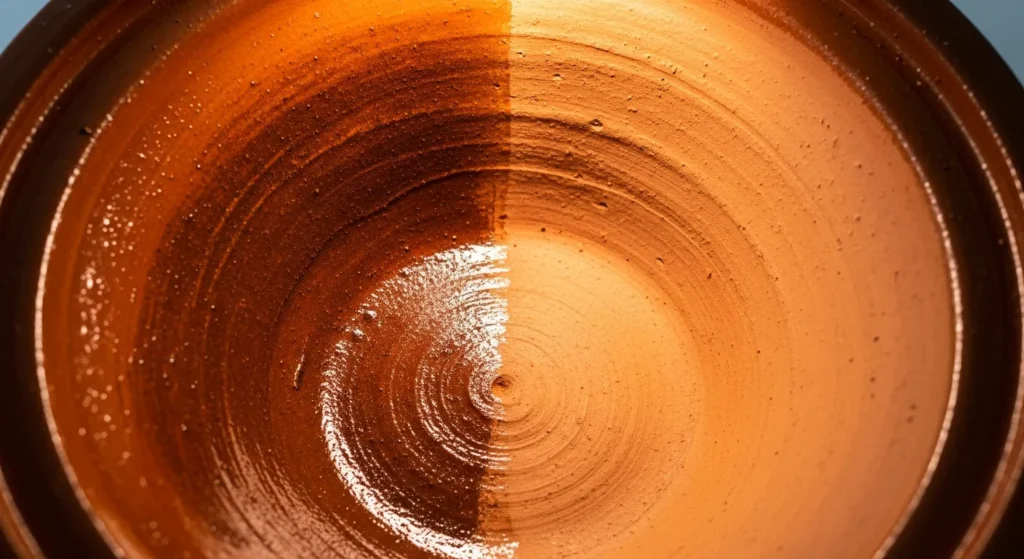
- Touch the interior surface — it should feel smoother and slightly waxy
- Look for an even, slightly darkened tone across the clay
- Check for dry patches that may have missed the oil
If the clay still feels rough or appears uneven, repeat Steps 3 and 4 once more. Two rounds of oiling and heating create a robust seasoned layer.
Quick Re-Season: The Stovetop Method
Short on time? This faster method works for light touch-ups between full re-seasonings:
- Rub the interior of the clean, dry tagine with olive oil
- Place on a heat diffuser on the lowest heat setting
- Warm gently for 20–30 minutes
- Turn off the heat and let cool on the diffuser
- Wipe any excess oil with a soft cloth
This method is ideal between deep cooks or after a heavier-than-usual cleaning session. It won’t fully rehydrate the clay like the oven method, but it refreshes the protective layer effectively.
Re-Seasoning Different Types of Tagines
Not every tagine needs the same level of care. Understanding the differences helps you tailor your approach.
Unglazed Clay Tagines
These need re-seasoning most frequently because the clay is fully porous. The Eco Moroccan Clay Tagine is a classic example—handcrafted from natural, unglazed clay using the traditional FRAN ALI method. For these tagines:
- Re-season every 3–6 months with regular use
- Always re-season after using soap or baking soda
- Full oven method is preferred over stovetop touch-ups
Glazed Cooking Tagines
Glazed tagines like the Contemporary Moroccan Cooking Tagine for Two have a protective coating that reduces porosity. For these tagines:
- Re-season less frequently — once or twice a year is usually sufficient
- Focus on unglazed areas — some glazed tagines have unglazed bases or rims
- Stovetop touch-up method is often enough
For a complete comparison, see our guide on glazed vs unglazed tagines.
Decorative Tagines
Decorative tagines and mini tagines don’t need seasoning—they’re not designed for heat. Simply dust and hand wash gently as needed.
How Often Should You Re-Season?
| Usage Pattern | Re-Seasoning Frequency | Method |
|---|---|---|
| Weekly cooking | Every 3–4 months | Full oven method |
| Monthly cooking | Every 6 months | Full oven method |
| Occasional use | Before each use (if stored 3+ months) | Full oven method |
| After soap cleaning | Immediately | Stovetop touch-up or full oven |
| After deep scrubbing | Immediately | Full oven method |
| After crack repair | Immediately | Full oven method |
Common Re-Seasoning Mistakes to Avoid
Using Too Much Oil
A thick coat of oil will pool and become sticky rather than polymerizing into a smooth layer. Thin, even coats are the key—two light applications beat one heavy one every time.
Heating Too Quickly
The same thermal shock principles that apply to cooking apply to tagine seasoning. Always start in a cold oven and heat gradually. Rushing this step defeats the purpose.
Using the Wrong Oil
Avoid oils with low smoke points (like flaxseed or walnut oil) that can become rancid or leave sticky residues. Olive oil is traditional and effective. Avocado oil or grapeseed oil are also good alternatives.
Skipping the Water Soak
Rehydrating the clay before oiling ensures the pores are open and receptive. Oiling dry, dehydrated clay results in a surface coating that won’t penetrate or bond properly.
Not Drying Completely After Soaking
This is the most dangerous mistake. Trapped moisture in damp clay creates steam during oven heating, which builds internal pressure and can cause cracking. Patience is essential—wait until the clay feels completely dry to the touch before applying oil.
Post-Seasoning: Your First Cook
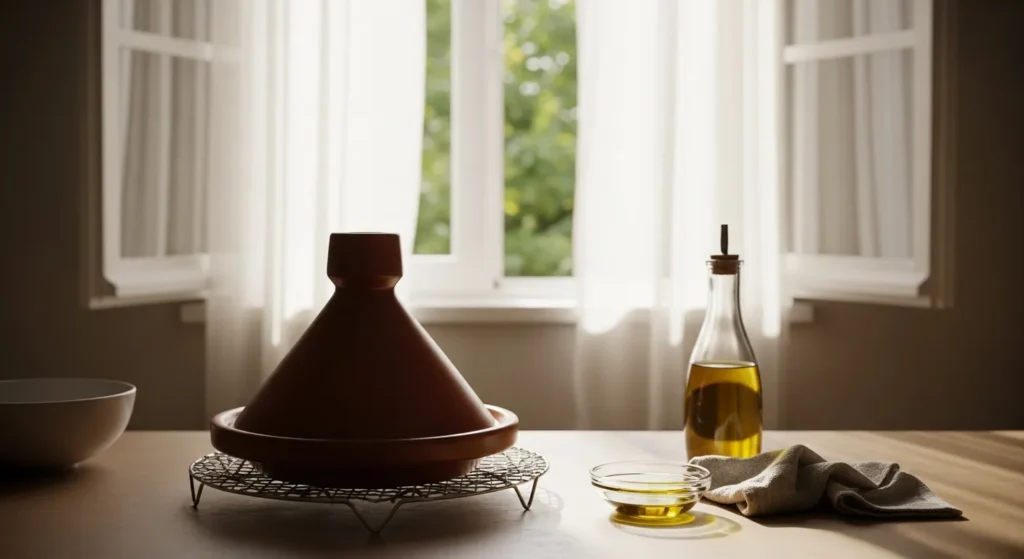
After re-seasoning, your tagine is ready for action. For the best results:
- Start with a forgiving recipe — something oil-rich and moderate in acidity
- Use a heat diffuser as always for stovetop cooking
- Keep the heat low — let the fresh seasoning strengthen gradually
- Avoid tomato-heavy dishes for the first 2–3 cooks — acid can strip new seasoning
A rich, slow-cooked chicken tagine like Chicken Tagine with Butternut Squash is an ideal post-seasoning recipe. The oils from the chicken and the gentle sweetness of the squash help build and strengthen the new seasoning layer.
Building Long-Term Tagine Seasoning
The best-seasoned tagines aren’t built from occasional maintenance—they’re built from consistent, thoughtful use:
- Cook regularly — frequent use builds seasoning faster than any treatment
- Use olive oil as your primary cooking fat
- Avoid soap for routine cleaning — warm water and a soft brush are sufficient
- Dry thoroughly after every wash
- Store with a light oil rub if not using for a few weeks
Over months and years, your tagine will develop a deep, rich patina that no amount of deliberate seasoning can replicate. This is the hallmark of a truly well-loved tagine—and exactly the kind of cooking tradition that Moroccan artisan craftsmanship was designed to support.
Final Thoughts: A Living Piece of Cookware
A clay tagine isn’t stainless steel. It doesn’t come out of the box performing at its peak and then slowly decline. It’s the opposite—a living piece of cookware that improves with every meal, every seasoning, every patient hour of slow cooking. When you re-season a tagine, you’re not just maintaining a pot. You’re continuing a centuries-old relationship between clay, oil, heat, and food.
Explore our collection of authentic cooking tagines handcrafted by Moroccan artisans, or discover new recipes to season your freshly cured pot with our tagine recipe collection.