Free Worldwide Shipping on Orders Over $150
The Tagine Cooking Vessel: Your Complete Guide to Moroccan Clay Cookware

Few pieces of cookware in the world are as instantly recognizable as the Moroccan tagine. That tall, conical lid rising above a shallow clay base isn’t just distinctive—it’s the product of centuries of engineering by North African communities who understood something profound: the vessel shapes the meal as much as the ingredients inside it.
Whether you’re a curious home cook researching your first purchase or a seasoned enthusiast looking to deepen your understanding, this tagine cooking vessel guide covers everything you need to know. From the anatomy and science behind this iconic Moroccan cooking vessel, to the different types of tagine pots, materials, sizes, and how to choose the right one for your kitchen—consider this your definitive reference.
The Anatomy of a Tagine: Why the Shape Matters
Every tagine consists of two parts that work in concert:
The Base
A wide, shallow, circular dish—typically 10 to 14 inches in diameter—where all the cooking happens. The low walls allow ingredients to be spread in layers, ensuring even heat distribution and maximum contact with the cooking surface. In traditional Moroccan cooking, the base doubles as the serving dish.
The Conical Lid
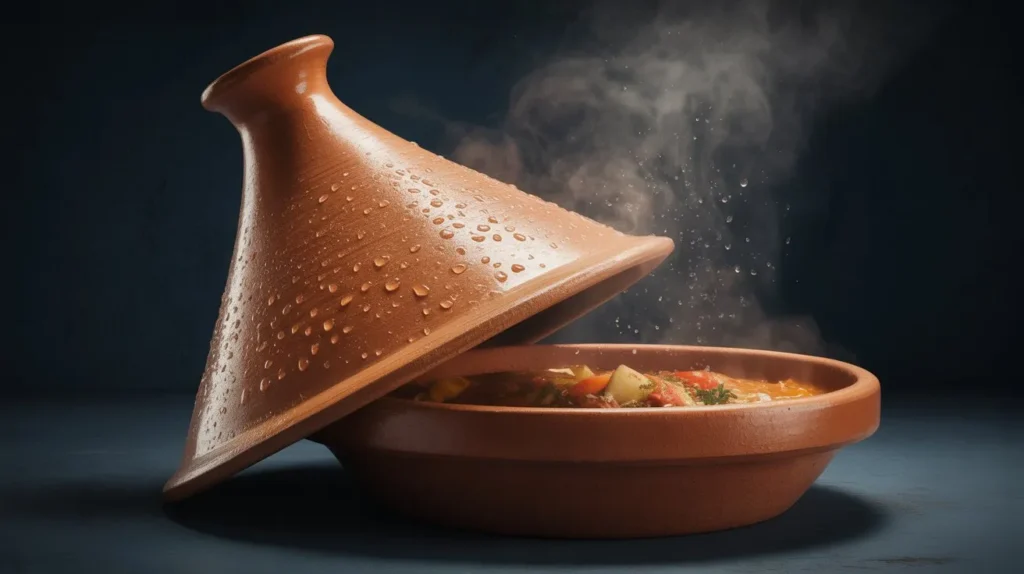
This is where the magic lives. The tall, tapering cone serves a precise thermodynamic function:
- Steam rises from the simmering food into the cool upper reaches of the lid
- Condensation forms as the steam meets the cooler clay surface
- Moisture drips back down into the dish, continuously basting the food from above
This self-basting cycle is the defining principle of tagine cooking. It’s why tagine dishes are extraordinarily tender, deeply flavored, and require remarkably little added liquid—the food essentially cooks in its own concentrated essence.
The small opening or knob at the very top of the cone is designed for lifting the lid, but it also plays a role in regulating minimal steam release, preventing pressure buildup while maintaining the moist cooking environment.
A Cooking Tradition Rooted in History
The tagine is far more than a clay cooking vessel—it’s a cultural artifact that tells the story of North African ingenuity.
Berber Origins
The origins of this North African cooking vessel trace back centuries to the Berber communities of Morocco and the greater Maghreb region. Nomadic peoples needed a way to cook tough, inexpensive cuts of meat using limited fuel and water. The tagine was their answer—a portable “oven” that could sit over a small charcoal fire and, through its ingenious lid design, transform humble ingredients into tender, nourishing meals.
A Philosophy of Patience
The tagine embodies a cooking philosophy that values patience over speed, flavor development over convenience. In Moroccan culture, the tagine is the centerpiece of everyday meals, family gatherings, and celebrations alike. It represents a way of cooking where time is an ingredient—where two or three hours of gentle simmering produces something that no shortcut can replicate.
Sustainability by Design
Long before sustainability became a modern concern, the tagine was solving the same problems. Its design minimizes water usage (the self-basting cycle recycles moisture), requires very little fuel (low heat is all that’s needed), and transforms affordable ingredients into meals that feed families generously. This conical earthenware pot is, at its core, an exercise in resourceful brilliance.
Types of Tagine Pots Explained
Not all tagines serve the same purpose. Understanding the different types is essential before making a purchase.
Cooking Tagines
These are functional vessels designed specifically for stovetop and oven use. They’re built to withstand sustained heat and are the type you need if your goal is to cook authentic Moroccan dishes.
Key characteristics:
- Made from heat-resistant clay or ceramic
- Typically unglazed or lightly glazed on the interior
- Require seasoning before first use
- Lead-free and food-safe
- Develop a cooking patina over time that enhances flavor
Explore the full range of cooking tagines to see what’s available.
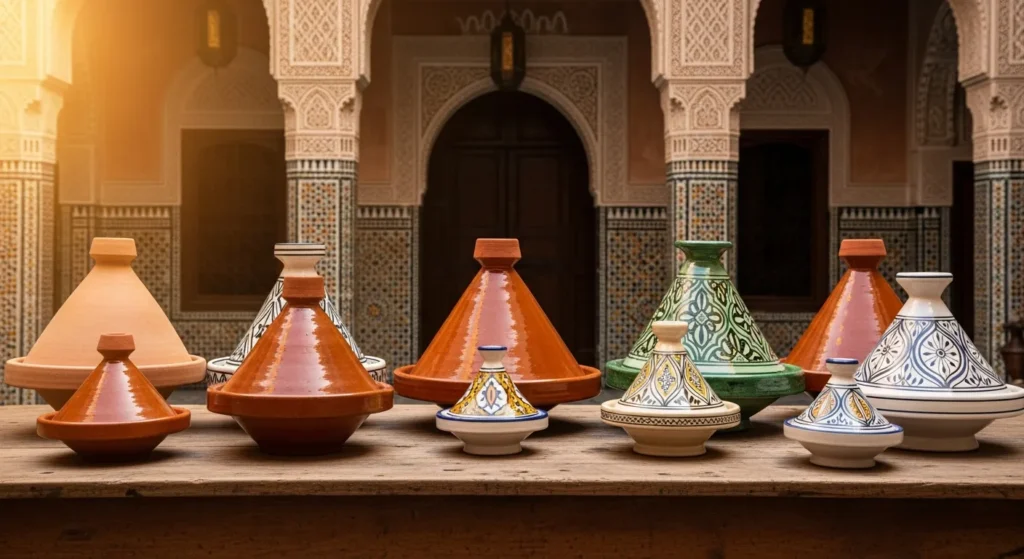
Decorative Tagines
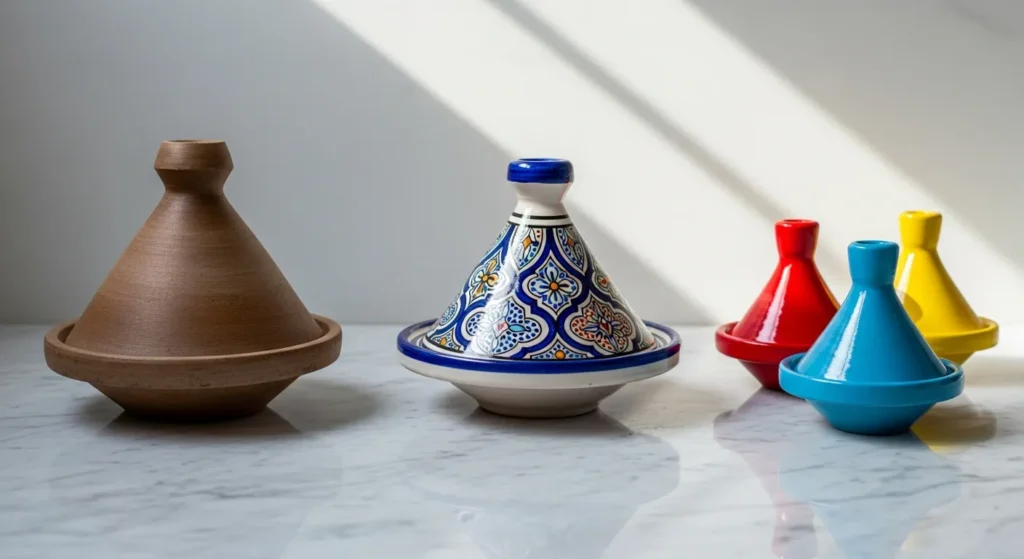
These are artisanal pieces designed for serving, display, and gifting—not for cooking. They’re typically made from ceramic and feature vibrant, hand-painted designs by master artisans.
Key characteristics:
- Hand-painted with intricate geometric and floral motifs
- Made by artisans in pottery capitals like Safi and Fez
- Perfect for serving couscous, salads, or cold dishes at the table
- Function as stunning home décor and conversation pieces
- Cannot withstand direct stovetop or oven heat
The decorative tagines collection showcases the artistry of Moroccan pottery traditions.
Serving / Mini Tagines
A sub-category of decorative pieces, mini tagines are small vessels—often sold in sets—designed for individual portions, condiments, spices, or table accents. They make charming gifts and elegant additions to a dinner table.
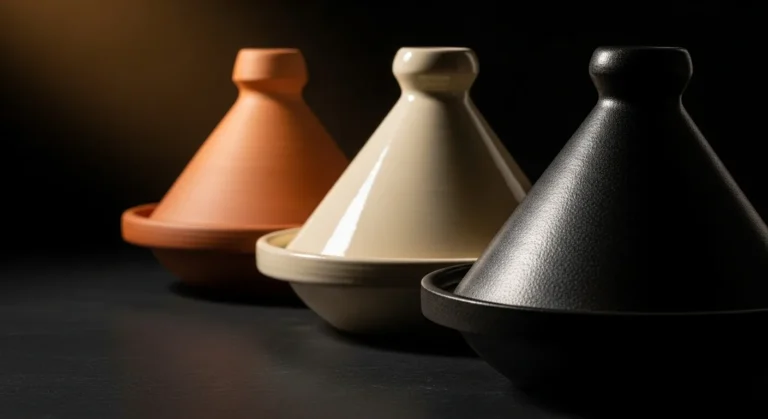
Clay Tagine vs Ceramic Tagine: Materials Compared
The material of your tagine determines its cooking performance, maintenance needs, and longevity. Here’s how the main options compare:
Unglazed Clay (Terracotta)
The most traditional choice. Unglazed clay is what Moroccan artisans have used for generations, and many purists consider it the only “true” tagine material.
Pros:
- ✔ Superior heat retention and even distribution
- ✔ Porous surface absorbs oils and spices, building flavor over time
- ✔ Natural, eco-friendly, and chemical-free
- ✔ Imparts a subtle earthy depth to dishes
- ✔ Most authentic cooking experience
Cons:
- ✘ Requires seasoning before first use
- ✘ More susceptible to thermal shock if heated too quickly
- ✘ Cannot be washed with soap (absorbs it)
- ✘ Needs periodic re-seasoning for maintenance
Best for: Dedicated home cooks who want the authentic experience and are willing to invest in proper care.
The Eco Moroccan Clay Tagine Set—handcrafted using the traditional FRAN ALI method—is a benchmark example of quality unglazed clay.
Glazed Clay / Ceramic
Glazed tagines feature a glass-like coating fused to the clay through high-temperature firing. This creates a non-porous surface that’s easier to maintain while retaining many benefits of clay cooking.
Pros:
- ✔ Non-porous—doesn’t absorb odors or flavors
- ✔ Easier to clean (mild soap is acceptable)
- ✔ No seasoning required
- ✔ Available in beautiful colors and designs
- ✔ Slightly more resistant to thermal stress
Cons:
- ✘ Doesn’t develop the flavor patina of unglazed clay
- ✘ Glaze quality varies—always verify lead-free and food-safe certification
- ✘ Some glazed tagines are decorative only (verify cooking suitability)
Best for: Cooks who want convenience and visual appeal alongside functionality.
The Contemporary Moroccan Cooking Tagine for Two is a beautifully glazed option designed for everyday stovetop use.
Cast Iron
Modern tagine-shaped pots made from cast iron offer maximum durability and are compatible with all heat sources, including induction.
Pros:
- ✔ Virtually indestructible
- ✔ Works on all stovetops including induction
- ✔ No thermal shock risk
- ✔ Excellent heat retention
Cons:
- ✘ Very heavy
- ✘ Doesn’t replicate the breathable, porous cooking of clay
- ✘ Less authentic flavor and cooking experience
- ✘ Missing the cultural and artisanal story of handcrafted clay
Best for: Cooks who prioritize convenience and durability above authenticity.
Quick Comparison Table
| Feature | Unglazed Clay | Glazed Ceramic | Cast Iron |
|---|---|---|---|
| Authenticity | ★★★★★ | ★★★☆☆ | ★★☆☆☆ |
| Flavor development | ★★★★★ | ★★★☆☆ | ★★★☆☆ |
| Heat retention | ★★★★★ | ★★★★☆ | ★★★★★ |
| Ease of cleaning | ★★☆☆☆ | ★★★★☆ | ★★★★☆ |
| Durability | ★★★☆☆ | ★★★☆☆ | ★★★★★ |
| Seasoning needed | Yes | No | No (but recommended) |
| Induction compatible | No | No | Yes |
| Weight | Light | Light–Medium | Heavy |
For a deeper dive into the glazed vs unglazed decision, see our complete comparison guide.
Tagine Pot Sizes: Finding Your Perfect Fit
Choosing the right size tagine ensures your food cooks properly and your portions are right. Here’s a straightforward guide:
Small (9–10 inches / 23–25 cm)
- Serves: 1–2 people
- Best for: Individual portions, couples, solo cooking
- Ideal dishes: Single-protein tagines, personal meal prep
Medium (11–12 inches / 28–30 cm)
- Serves: 2–4 people
- Best for: Small families, everyday cooking, most recipes
- Ideal dishes: Chicken tagine, fish tagine, vegetable tagine
- Our pick: The Traditional Moroccan Clay Tagine comes in 28cm and 30cm options—perfect for this range.
Large (13–14 inches / 33–35 cm)
- Serves: 4–6 people
- Best for: Family dinners, entertaining guests
- Ideal dishes: Lamb tagine with vegetables, large batch cooking
Extra Large (15+ inches / 38+ cm)
- Serves: 6+ people
- Best for: Large gatherings, celebrations, dinner parties
- Ideal dishes: Feast-sized lamb or beef tagine
Size Selection Tips
- When in doubt, go one size up — a slightly larger tagine with a bit less food cooks better than an overstuffed small one
- Consider your stovetop — ensure the tagine fits comfortably on your burner
- Factor in the lid — the conical lid adds significant height; check your oven clearance if you plan to oven-cook
How to Choose a Tagine: The Decision Guide
With so many options, here’s a practical framework for choosing the best tagine pot for cooking:
Question 1: What’s Your Primary Purpose?
- Cooking authentic Moroccan dishes → Cooking tagine (unglazed or glazed)
- Serving food beautifully at the table → Decorative tagine
- Both cooking and presentation → Glazed cooking tagine
- Gifts or home décor → Decorative or mini tagines
Question 2: How Often Will You Cook With It?
- Weekly or more → Invest in quality unglazed clay—it will reward you with better flavor over time
- Monthly → Glazed cooking tagine offers lower maintenance
- Occasionally → Either works; glazed is more forgiving between uses
Question 3: What’s Your Heat Source?
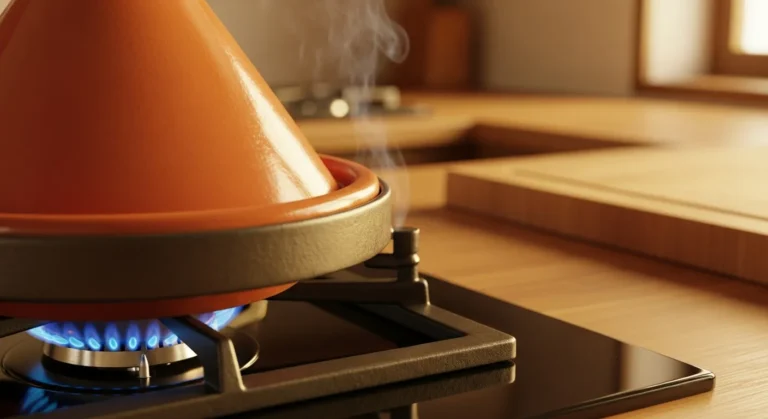
- Gas stovetop → Any clay tagine + heat diffuser (essential)
- Electric coil → Clay tagine + heat diffuser (strongly recommended)
- Ceramic/glass top → Clay tagine + diffuser (optional but smart)
- Induction → Cast iron tagine, or clay with induction-compatible diffuser
- Oven only → Any cooking tagine works beautifully
Question 4: How Many Are You Cooking For?
- 1–2 people → Small (9–10″) or medium (11″)
- 3–4 people → Medium (11–12″)
- 5+ people → Large (13″+)
Question 5: Do You Value Authenticity or Convenience?
- Authenticity → Handmade unglazed clay, traditional seasoning ritual, develops patina
- Convenience → Glazed ceramic or cast iron, lower maintenance, instant use
What Is a Tagine Pot Used For?
The tagine cooking vessel is remarkably versatile. Here’s what you can create with one:
Slow-Cooked Meat Dishes
The tagine’s self-basting design was purpose-built for transforming tough, affordable cuts into meltingly tender meals. Classic options include:
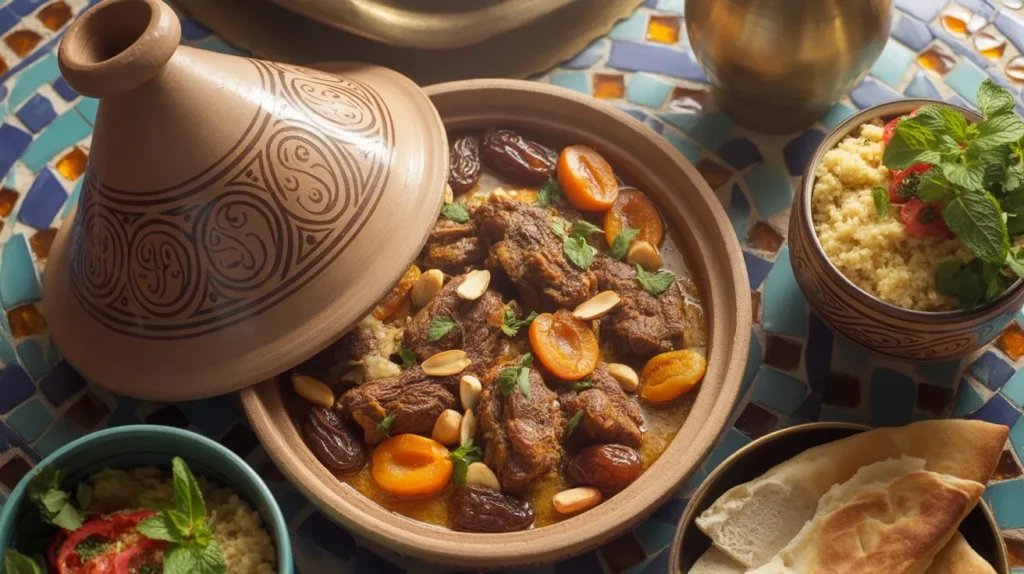
- Lamb tagine with dried figs and almonds
- Beef tagine with prunes and apricots
- Chicken tagine with apricots and almonds
Fish and Seafood
Lighter but equally flavorful, fish tagines cook in a fraction of the time:
Vegetarian and Vegan Dishes
Hearty combinations of root vegetables, chickpeas, and Moroccan spices make satisfying tagine meals:
- Chicken tagine with vegetables (adapt by omitting the chicken)
- Seasonal vegetable tagines with sweet potato, carrots, and zucchini
Beyond Moroccan Cuisine
While the tagine is rooted in North African tradition, creative cooks use them for:
- Mediterranean stews and braises
- Indian curries (the slow-cooking principle translates beautifully)
- Fruit compotes and desserts
- Any dish that benefits from low, slow, moist heat
For recipe inspiration, explore our full recipe collection and the essential Moroccan spice guide that brings these dishes to life.
The Handmade Moroccan Tagine: Why Craftsmanship Matters
In an era of factory-produced cookware, there is something irreplaceable about a handmade Moroccan tagine. Here’s why artisan craftsmanship makes a genuine difference:
Every Piece Is Unique
Each tagine is shaped, dried, fired, and (for decorated pieces) hand-painted by individual artisans. Slight variations in color, texture, and form aren’t imperfections—they’re the authentic fingerprints of the maker. No two handcrafted tagines are identical.
Heritage Techniques
The artisans crafting these vessels work in pottery capitals like Safi and Fez, where ceramic traditions date back hundreds of years. Techniques like the FRAN ALI method (used for the Eco Moroccan Clay Tagine) have been passed down through generations—refined over time but never abandoned.
Supporting Communities
When you choose an authentically handcrafted tagine, you’re supporting a network of over 2,000 artisans and their families. Fair, direct partnerships ensure these communities can sustain their craft and pass their knowledge to the next generation. Learn more about our artisan partnerships and the communities behind every piece.
Quality You Can Feel
Handcrafted clay is denser, more evenly constructed, and better suited to cooking than mass-produced alternatives. The quality of the clay, the firing temperature, and the craftsmanship directly impact durability—a well-made tagine can last decades or even generations.
Getting Started: From Unboxing to First Meal
Once you’ve chosen your tagine, here’s the path from purchase to your first aromatic dish:
Step 1: Season Your Tagine
New clay cooking tagines must be seasoned before use. This crucial step strengthens the clay, fills its pores with protective oil, and prepares it for heat. The full process involves soaking, drying, oiling, and a slow oven cure. Read the complete seasoning guide for detailed instructions.
Step 2: Understand Your Heat Source
How you heat your tagine matters enormously. Gas and electric stovetops require a heat diffuser to protect the clay from concentrated heat. Our tagine heat diffuser guide explains when you need one and when you can skip it.
Step 3: Cook Low and Slow
The universal rule of tagine cooking: start cold, heat gradually, and never exceed medium heat. Place your tagine on a cold burner, warm slowly over 10–15 minutes, and let your dish simmer for 1.5 to 3 hours. Patience is the defining ingredient.
Step 4: Care for Your Investment
Proper cleaning and storage ensure your tagine improves with age. Hand wash with warm water, dry completely, and store with the lid separated. Our tagine care guide covers everything from routine cleaning to long-term maintenance.
For the complete step-by-step cooking process across all heat sources, visit our how to use a tagine complete guide.
Tagine vs Dutch Oven: How They Compare
This is one of the most common questions from home cooks considering a tagine. Both are slow-cooking vessels, but they work differently:
| Feature | Tagine | Dutch Oven |
|---|---|---|
| Cooking principle | Self-basting via conical lid condensation | Even heat from heavy walls and lid |
| Liquid needed | Minimal—moisture recycles continuously | More liquid required |
| Flavor concentration | Exceptionally concentrated | Good, but more diluted |
| Heat source | Low heat only; needs diffuser on gas/electric | All heat sources, any temperature |
| Material | Clay, ceramic | Cast iron, enameled cast iron |
| Weight | Light | Heavy |
| Versatility | Specialized for tagine-style cooking | Multipurpose (braising, baking, frying) |
| Cultural experience | Authentic Moroccan | European/American |
The verdict: A Dutch oven is more versatile, but a tagine produces a distinctly different result—more concentrated flavors, more tender textures, and a cooking ritual that connects you to centuries of Moroccan tradition. For authentic tagine dishes, the tagine cooking vessel is irreplaceable.
Frequently Asked Questions
Can you use a tagine on any stovetop?
Clay tagines work on gas, electric, and ceramic stovetops (with a heat diffuser for gas and electric). For induction, you’ll need a cast iron tagine or an induction-compatible diffuser plate.
Do I need to season a tagine before using it?
Yes—seasoning is essential for clay cooking tagines. It strengthens the clay and prevents cracking. Glazed cooking tagines and cast iron tagines don’t require seasoning.
What’s the difference between a cooking tagine and a decorative tagine?
Cooking tagines are made from heat-resistant clay and designed for stovetop and oven use. Decorative tagines are hand-painted ceramic art pieces meant for serving and display—never for cooking.
How long does a tagine last?
With proper care, a handmade clay tagine can last decades. Many Moroccan families cook with tagines that have been in the family for generations.
Can a tagine go in the oven?
Yes. Cooking tagines are oven-safe. Start in a cold oven and heat gradually—never place a cold tagine into a preheated oven.
Is a tagine better than a slow cooker?
They serve different purposes. A slow cooker is convenient for “set and forget” cooking. A tagine produces more concentrated flavors through its condensation cycle and offers a more hands-on, rewarding cooking experience.
Where can I buy an authentic Moroccan tagine?
Our shop offers a curated collection of handcrafted Moroccan tagines, from cooking vessels to decorative pieces, all sourced directly from artisans. For buying guidance, see our where to buy a Moroccan tagine guide.
Why is my tagine cracking?
Cracking almost always results from thermal shock—sudden temperature changes. Always heat gradually and use a diffuser on stovetops. Read our tagine crack prevention guide for detailed solutions.
Final Thoughts: More Than Cookware
A tagine cooking vessel is more than a pot. It’s a bridge between ancient tradition and your modern kitchen. It’s a statement that some things deserve time—that patience, craft, and simplicity can produce meals more profound than any shortcut allows.
When you lift that conical lid and the steam releases the fragrance of cumin, saffron, and slow-braised meat, you’re experiencing something that hasn’t changed in centuries. And when you hold a handcrafted tagine shaped by a Moroccan artisan’s hands, you’re holding a piece of living history.
Start your journey with our collection of authentic Moroccan tagines, or explore the learning center for more guides, recipes, and traditions that bring Moroccan cooking to life.