Free Worldwide Shipping on Orders Over $150
Best Tagine Material: Clay vs Ceramic vs Cast Iron — An Honest Comparison

Walk into any cookware shop and you’ll find tagines made from at least three fundamentally different materials: traditional clay, modern ceramic, and cast iron. They all share the same iconic conical shape—but the material underneath determines everything: how your food tastes, how long the pot lasts, how safely you can cook in it, and which heat sources you can use.
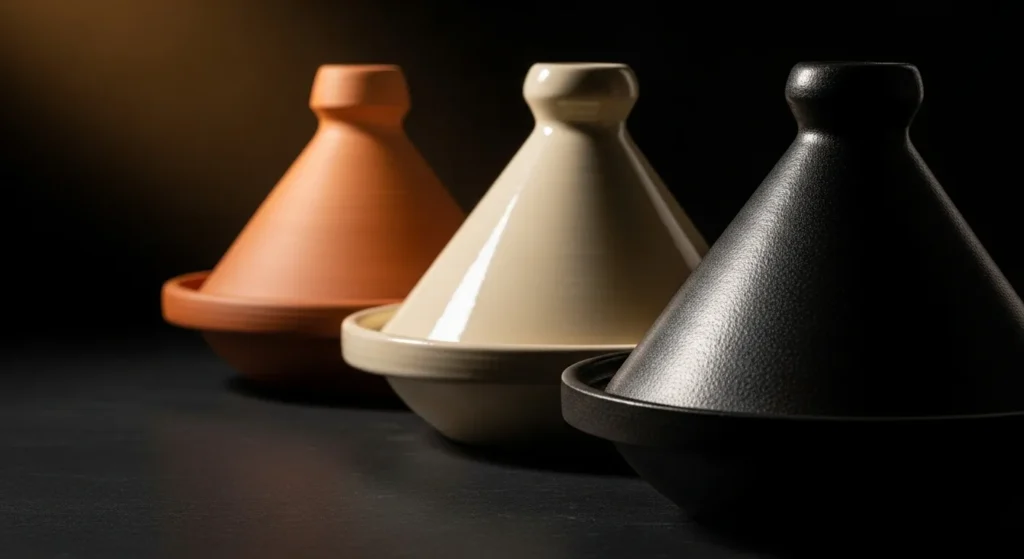
Choosing the best material for a tagine pot isn’t a simple “this one wins” answer. Each material offers genuine advantages the others can’t replicate, and each carries trade-offs that matter in a real kitchen. Clay delivers unmatched flavor depth. Ceramic adds convenience and safety assurance. Cast iron brings brute durability and heat source flexibility.
This guide goes deeper than surface-level comparisons. We’ll cover the flavor science behind each material, real-world durability, lead-free safety concerns every buyer should understand, and honest recommendations based on how you actually cook. If you’ve already read our glazed vs unglazed tagine comparison, think of this as the next chapter—expanding the conversation to include cast iron and the safety dimensions that guide smart purchasing decisions.
Understanding the Three Tagine Materials
Before comparing results, it helps to understand what each material actually is and how it interacts with heat and food.
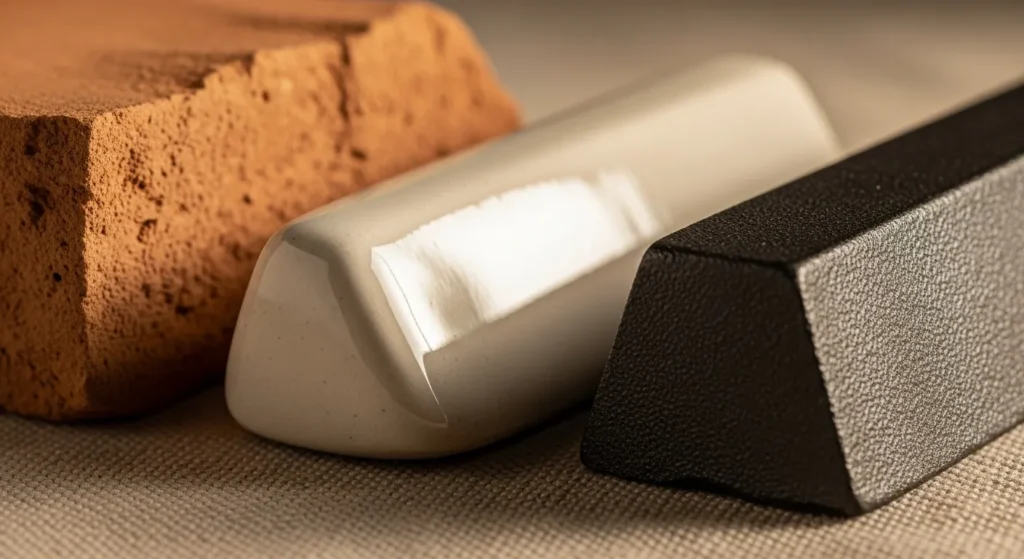
Traditional Clay (Terracotta)
This is the original. The tagine cooking vessel was born in clay—handcrafted from natural terracotta by Berber communities in North Africa centuries ago. Clay tagines can be unglazed (raw terracotta) or partially glazed on the interior, but the core material remains porous, naturally fired earthenware.
Clay is a poor conductor of heat but an excellent retainer. It absorbs heat slowly, distributes it gently, and releases it gradually. This is precisely why clay produces the most nuanced, layered cooking results—the food is never shocked by sudden temperature changes.
Ceramic (Fully Glazed Stoneware)
Ceramic tagines are made from stoneware clay fired at significantly higher temperatures than traditional terracotta. The entire surface—inside and out—is covered with a vitreous glaze that creates a non-porous, glass-like finish.
This seals the clay completely, which means ceramic tagines don’t absorb flavors or moisture the way traditional clay does. They’re easier to clean, more resistant to staining, and generally require no seasoning before first use.
Cast Iron
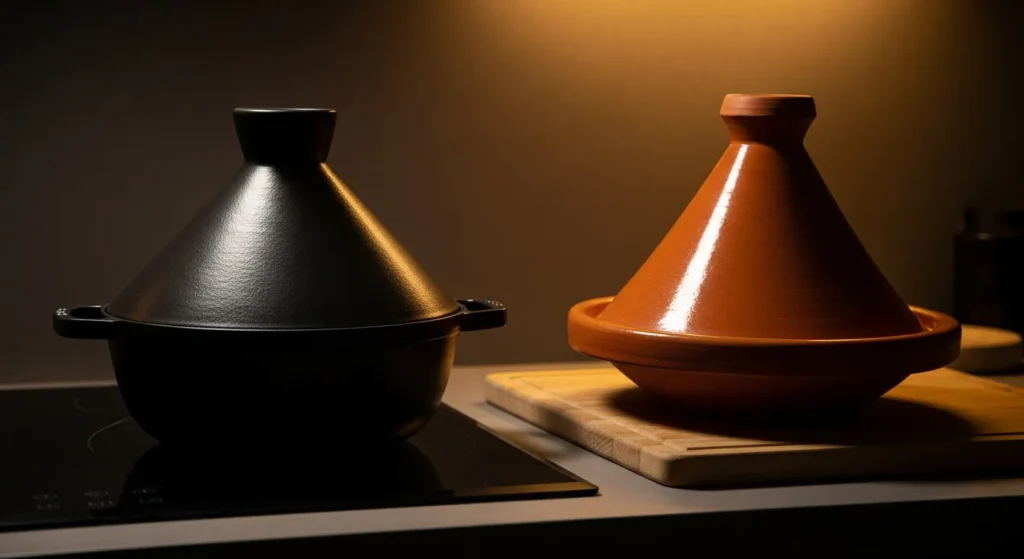
Cast iron tagines replace the clay entirely with heavy, dense metal—sometimes enameled, sometimes raw. The base is a thick cast iron pot, and the conical lid may be cast iron or a lighter material like ceramic or glass.
Cast iron excels at heat retention and even distribution. It works on every heat source, including induction. It’s extremely durable. But it fundamentally changes the cooking dynamics of the tagine, trading the gentle, porous nature of clay for the brute thermal mass of metal.
The Flavor Science: How Material Shapes Taste
This is where the differences matter most to anyone who cooks for flavor, not just convenience. The material your tagine is made from directly influences how your food tastes—and the science behind it is straightforward.
Clay: The Flavor Champion
Traditional terracotta is porous. Over time, the clay absorbs oils, spices, and cooking liquids, developing what experienced cooks call a flavor patina—a seasoned layer that subtly enhances every subsequent dish. This is why Moroccan families who cook with the same clay tagine for decades report that their food just keeps getting better.
The porous surface also interacts with the self-basting condensation cycle in a unique way. As steam rises into the conical lid and condenses back down, the moisture picks up trace minerals and flavor compounds from the clay itself. The result is a dish that tastes rooted, earthy, and complex in ways that are difficult to replicate in non-porous materials.
Clay’s gentle, slow heat response also means proteins break down more gradually, producing silkier textures and more tender meat. When you cook a lamb tagine with dried figs and almonds in a well-seasoned clay tagine, the difference is unmistakable.
Ceramic: Clean and Consistent
Because ceramic is fully sealed by its vitreous glaze, it doesn’t absorb anything. Each dish starts from a flavor-neutral surface. This is both an advantage and a limitation.
The advantage: no flavor carryover between dishes. If you cook a pungent fish tagine one night and a delicate chicken dish the next, there’s zero risk of lingering flavors bleeding through. Ceramic keeps each meal distinctly its own.
The limitation: you lose the cumulative flavor-building that makes old clay tagines so special. Ceramic produces excellent results—but they’re consistent rather than evolving. The food tastes like the ingredients and spices you put in, nothing more.
Ceramic also tends to heat slightly faster than traditional clay, which can reduce the ultra-slow condensation cycle by a small margin. The flavor difference is subtle but real: ceramic tagine dishes are clean and bright, while clay tagine dishes are deeper and more complex.
Cast Iron: Bold but Different
Cast iron brings significant thermal mass—it gets hot, stays hot, and distributes heat very evenly. This makes it excellent for searing meat before braising (something you should never do in a clay tagine) and produces rich, caramelized flavors at the bottom of the pot.
However, cast iron fundamentally changes the cooking character. The self-basting condensation cycle still occurs—steam rises, condenses on the lid, and drips back—but the dynamics are different. Metal heats faster and more aggressively than clay, which can drive moisture out of ingredients more quickly and produce a slightly less concentrated sauce.
Cast iron also doesn’t breathe. Clay gently exchanges trace amounts of air and moisture through its porous walls, creating a micro-environment that metal can’t replicate. This is why tagine purists maintain that a cast iron tagine vs clay tagine comparison always favors clay on flavor depth, even if cast iron delivers excellent all-around performance.
Terracotta Tagine Benefits: Why Clay Remains King
For anyone focused on authentic Moroccan cooking, the traditional clay tagine offers a combination of benefits that no other material matches:
- Flavor patina development — gets better with age and use
- Superior self-basting — the porous clay interacts with the condensation cycle for deeper flavor
- Gentle, forgiving heat response — reduces the risk of overcooking or burning delicate ingredients
- Lightweight — significantly lighter than cast iron, making it easier to move from stove to table
- Cultural authenticity — cooking in clay connects you to a centuries-old Moroccan tradition
- Eco-friendly production — natural clay, minimal processing, no industrial chemicals
- Stunning presentation — a handcrafted clay tagine is a conversation piece at the dining table
The trade-off? Clay requires more care. It must be seasoned before first use, heated gradually to avoid thermal shock, and cleaned gently. It needs a heat diffuser on most stovetops and cannot go directly on an induction hob. With proper tagine care, though, a clay tagine will last decades—many Moroccan families cook with tagines passed down through generations.
Ceramic Tagine Pros and Cons
Ceramic tagines occupy a practical middle ground. Here’s an honest breakdown:
Pros
- No seasoning required — ready to use out of the box
- Non-porous surface — won’t absorb stains, odors, or flavors between dishes
- Easy to clean — the glazed surface wipes clean with warm water and mild soap
- Lead-free assurance — reputable manufacturers fire ceramic glaze at temperatures high enough to encapsulate or eliminate lead. Always verify certification (more on this below)
- Attractive finish — available in a wide range of colors and designs
- Good heat retention — while not as gentle as raw clay, ceramic holds and distributes heat well
- Less fragile than unglazed clay — the heavy glaze adds structural integrity
Cons
- No flavor patina — each dish starts from neutral; no cumulative flavor enhancement
- Higher firing temperatures alter cooking character — the denser material conducts heat slightly differently than traditional terracotta
- Glaze quality varies dramatically — cheap ceramic tagines may use low-grade glazes that compromise food safety (see the lead-free section below)
- Heavier than unglazed clay — the thick glaze layer adds weight
- Thermal shock still a risk — while more resistant than raw clay, ceramic can still crack if subjected to sudden temperature changes
- Less cultural connection — a factory-produced ceramic tagine doesn’t carry the same story as a hand-shaped clay pot from a Moroccan artisan workshop
Is a Cast Iron Tagine Worth It?
Cast iron tagines have gained popularity as “indestructible” alternatives to clay. But is a cast iron tagine worth it? That depends entirely on what you value.
Where Cast Iron Excels
- Virtually indestructible — cast iron doesn’t crack, chip, or break from thermal shock
- Works on every heat source — gas, electric, ceramic, induction, oven, even campfires
- Excellent for searing and browning — you can brown meat directly in the base before adding liquid, building deeper caramelized flavors
- Superior heat retention — once hot, cast iron stays hot for a long time, even after reducing the flame
- Dishwasher safe (enameled models) — easy, low-maintenance cleaning
- No seasoning needed (enameled) — ready to cook immediately
Where Cast Iron Falls Short
- Very heavy — a cast iron tagine can weigh 12–15 pounds, making it difficult to lift and serve at the table
- Missing the clay “magic” — no porous interaction with food, no flavor patina, no mineral trace exchange
- Faster, more aggressive heat — can overcook delicate ingredients if you’re not careful
- No cultural authenticity — cooking in cast iron produces good food, but it’s not tagine cooking in the traditional sense
- Expensive — quality cast iron tagines often cost $80–$200+, significantly more than a handcrafted clay tagine
- Condensation dynamics differ — the metal lid doesn’t create the same delicate moisture return as a clay conical lid
The Honest Verdict
A cast iron tagine is worth it if you primarily value convenience, durability, and induction compatibility. It’s a good braiser that happens to be shaped like a tagine.
But if you’re drawn to the tagine for what makes it unique—the slow, gentle cooking, the evolving flavor, the connection to Moroccan tradition—cast iron doesn’t deliver that experience. A well-cared-for clay tagine from our collection of cooking tagines will outperform cast iron on flavor and authenticity, every time.
Lead-Free Tagine Pot: The Safety Question Every Buyer Should Ask
This is the section most tagine comparisons skip—and it’s arguably the most important, especially for ceramic and glazed clay tagines.
Why Lead Matters
Historically, some ceramic glazes contained lead compounds. Lead makes glazes smoother, shinier, and easier to work with during manufacturing. But when lead-containing glaze comes into contact with acidic foods (tomatoes, preserved lemons, citrus—all staples in Moroccan cooking), it can leach into the food at dangerous levels.
Lead exposure from cookware is a real concern, not a theoretical one. This is why the question “is this tagine lead-free?” should be the first thing you ask before purchasing any glazed or ceramic tagine.
How to Ensure Your Tagine Is Lead-Free
- Buy from reputable sources that explicitly state lead-free certification. All tagines sold through our shop are certified lead-free and food-safe—this is non-negotiable for cooking vessels.
- Check for California Proposition 65 compliance. Products sold in the United States that contain lead must carry a Prop 65 warning. The absence of this warning on a US-sold product is a positive indicator.
- Look for FDA food-contact compliance. Reputable ceramic cookware manufacturers test their glazes to meet FDA standards for lead and cadmium release.
- Be cautious with unbranded imports. Inexpensive tagines from unknown manufacturers—especially those sold through generic online marketplaces—may not have undergone safety testing. A beautiful glaze means nothing if the chemistry is unsafe.
- Understand the difference between decorative and cooking tagines. Decorative tagines are designed for display and serving, not for cooking over heat. Their glazes are chosen for visual beauty, not necessarily food-contact safety under sustained heat. Never use a decorative tagine for stovetop or oven cooking.
Material-by-Material Safety Breakdown
| Material | Lead Risk | Safety Guidance |
|---|---|---|
| Unglazed clay | Very low | No glaze = no lead risk. Ensure the clay itself is food-grade and free of industrial contaminants |
| Glazed clay | Moderate (depends on glaze) | Demand lead-free certification. Avoid unbranded products with unknown glaze composition |
| Ceramic (stoneware) | Low to moderate | High-temperature firing encapsulates most contaminants, but quality varies. Always verify |
| Cast iron (raw) | None | No glaze or ceramic coating. Iron is a naturally safe cooking surface |
| Cast iron (enameled) | Very low | Quality enamel is vitrified at extremely high temperatures. Stick to reputable brands |
The safest choice is always a tagine from a manufacturer that provides explicit, verifiable lead-free and food-safe certification. At MoroccanTagines.com, every cooking tagine we sell meets this standard—because the authenticity of the cooking experience means nothing if the safety isn’t guaranteed.
Durability and Longevity: Which Material Lasts Longest?
Clay: Decades with Care
A well-maintained clay tagine can last 20–30 years or more. Many Moroccan families cook with tagines that have been in the family for generations. The keys to longevity are straightforward:
- Season before first use and re-season periodically
- Always use a heat diffuser on the stovetop
- Heat and cool gradually—never expose to thermal shock
- Hand wash only; never put in a dishwasher
- Store with care to prevent chipping
If a clay tagine does crack, it’s almost always due to thermal shock—not material failure. Follow the crack prevention guidelines and your tagine will outlast most other cookware in your kitchen.
Ceramic: Long-Lasting but Not Heirloom
Ceramic tagines are more resistant to surface damage than unglazed clay. The thick glaze protects against staining, minor impacts, and moisture absorption. However, ceramic is still susceptible to cracking from thermal shock, and the glaze can chip over time at stress points like the rim and base.
A quality ceramic tagine will last 10–20 years with proper care. It won’t develop the character of an aged clay tagine, but it will remain functionally reliable throughout its life.
Cast Iron: Nearly Indestructible
Cast iron is the clear durability winner. It doesn’t crack, doesn’t chip (unless enameled), and can survive drops, extreme heat, and aggressive cleaning. A cast iron tagine is essentially a lifetime purchase—it will outlast you.
The only vulnerability is rust (raw cast iron) or enamel chipping (enameled models). Both are preventable with basic care.
Longevity Comparison
| Factor | Clay | Ceramic | Cast Iron |
|---|---|---|---|
| Expected lifespan | 20–30+ years | 10–20 years | Lifetime |
| Thermal shock resistance | Low | Moderate | Very high |
| Chip/crack resistance | Low | Moderate | Very high |
| Maintenance needed | High | Low | Low |
| Improves with age? | Yes (flavor patina) | No | No |
| Repairability | Limited | Limited | Excellent |
The Complete Comparison: Clay vs Ceramic vs Cast Iron Tagine
| Feature | Clay (Terracotta) | Ceramic (Stoneware) | Cast Iron |
|---|---|---|---|
| Flavor depth | ★★★★★ | ★★★★☆ | ★★★☆☆ |
| Flavor patina | Develops over time | None | None |
| Self-basting quality | Superior | Very good | Good |
| Heat distribution | Gentle, slow | Moderate | Even, aggressive |
| Heat source flexibility | Limited (diffuser needed) | Limited (diffuser recommended) | All sources including induction |
| Searing/browning | Not recommended | Not recommended | Excellent |
| Weight | Light | Medium | Very heavy |
| Durability | Moderate (needs care) | Good | Excellent |
| Lead-free safety | Very safe (unglazed) | Verify certification | Safe |
| Seasoning required | Yes | No | No (enameled) |
| Ease of cleaning | Hand wash only | Easy | Easy |
| Cultural authenticity | Deep Moroccan heritage | Modern adaptation | No connection |
| Presentation value | Stunning | Attractive | Functional |
| Price range | $30–$90 | $40–$120 | $80–$200+ |
| Best for | Flavor purists, tradition | Easy maintenance, beginners | Induction users, durability |
Which Material Should You Choose?
Choose a Clay Tagine If:
- Flavor depth and authenticity are your top priorities
- You enjoy the ritual of seasoning and caring for your cookware
- You want a vessel that gets better with every use
- You value handcrafted artisanship and cultural connection
- You cook on gas, electric, or in the oven (with a heat diffuser)
Our Eco Moroccan Clay Tagine Set is handcrafted using the traditional FRAN ALI method—chemical-free, eco-friendly, and available in sizes for 1 to 4 people. For everyday cooking for two, the Contemporary Moroccan Cooking Tagine offers a beautiful glazed finish with authentic clay cooking performance.
Choose a Ceramic Tagine If:
- You want low-maintenance cookware with no seasoning required
- Clean, consistent flavors matter more than evolving depth
- You cook a variety of cuisines and prefer no flavor carryover
- You’re a beginner who wants a forgiving first tagine
Choose a Cast Iron Tagine If:
- You cook exclusively on induction and don’t want to buy a diffuser
- Durability is your absolute top priority
- You want to sear and brown meat before braising in the same pot
- Weight isn’t a concern in your kitchen
The Best of Both Worlds
Many experienced home cooks own both a clay tagine and a cast iron option. They use clay for authentic Moroccan dishes—chicken tagine with apricots and almonds, beef tagine with prunes—where the flavor depth matters most, and cast iron for heavier braises and situations requiring induction compatibility.
If you can only choose one, choose clay. It does the one thing a tagine is designed to do—slow, gentle, self-basting cooking—better than any other material. For a deeper look at how the tagine compares with entirely different vessel types, our tagine vs Dutch oven vs slow cooker guide puts the clay tagine’s advantages into even sharper perspective.
Start Your Tagine Journey
Now that you understand what each material brings to the table, you’re ready to choose the tagine that fits your kitchen, your cooking style, and your priorities. Whether you value the evolving flavor of clay, the convenience of ceramic, or the durability of cast iron, the most important thing is to start cooking.
Explore our collection of authentic Moroccan cooking tagines handcrafted by artisans in Morocco, learn the essential Moroccan spice blends that bring your tagine to life, and discover the recipes and techniques in our learning center that turn first-time tagine owners into confident, passionate cooks.
Ready to cook with authenticity? Browse our cooking tagine collection and bring centuries of Moroccan tradition to your kitchen.